Category Archives: Uncategorized

Darla’s 30-Day Journey Back Home

Darla went missing from Mundelein on July 8, nearly 20 miles from her home.

Knowing she was a high flight-risk dog, her owner had taken every reasonable precaution to keep her safe. Darla was wearing both a harness and a properly fitted martingale collar, was attached to two leashes, and was tethered to her car seat. Despite all of those precautions, she managed to escape from the vehicle and bolted, dragging both leashes behind her.

A team of volunteers and lost dog recovery specialists were engaged immediately.  Before developing a recovery strategy, we gathered as much information as we could about Darla’s history. We learned she had been rescued two years ago from an animal control shelter in southern Illinois, where she was found as a stray and suspected to have been from a nearby Foxhound puppy mill.  She was significantly undersocialized and determined to be unadoptable, so her new family took her in and showed her what love looks like. Her owner also shared that this was not her first escape. Just two weeks after being adopted, Darla got loose and remained on the run for two weeks. During that time, she stayed close to home. Attempts to lure her were unsuccessful, and she refused to enter a traditional box trap. She was eventually recovered when her family created a trail of treats leading into their fenced backyard, where a family member was able to quickly close the gate behind her.

Knowing that history, we understood this would likely be a challenging recovery. Darla is extremely skittish by nature. Although Darla had bonded with a couple of family members and the household dogs over the past two years, experience has shown that once a dog enters survival mode, even familiar people can be perceived as a threat.

Shortly after she escaped, we received a report that Darla had been clipped by a vehicle and was seen running into a nearby wooded area. Since she was potentially injured and still dragging two leashes that could get entangled on something, locating her quickly became our top priority.

SmithicAir came out to search the area using a thermal drone. After about an hour, he located Darla in the woods. Using one of the family’s dogs as a magnet dog, he carefully guided the family toward her location. Magnet dogs are oftentimes used in lost dog recovery to encourage a frightened, lost dog to lower its guard and approach, appealing to natural canine social behavior.  Read more…https://lostdogsillinois.org/magnet-dogs-a-powerful-tool-in-lost-dog-recovery/

Unfortunately, as they got close, Darla bolted. We eventually lost sight of her, and despite additional aerial searches, she could not be located again.  Under the right conditions, thermal drones can be a great tool, but, as we saw here, securing the dog may be the bigger challenge. With Darla no longer in the wooded area, the recovery entered its next phase.

Our first priority was educating the public. We needed people to understand that if they saw Darla, they should not chase her, call out to her or pursue her in any way. Instead, they should quietly observe her if possible and report the sighting. Every chase risks pushing a dog farther from the area or into danger.

Family, friends and volunteers did an incredible job helping to spread that information. They posted more than 400 brightly colored flyers throughout a five-mile radius. We started out flyering a three-mile radius from where she went missing and expanded the coverage area as new information came in.  Darla was also shared across numerous Facebook groups, Nextdoor, and Neighbors. Several homeowners associations graciously distributed her information to their residents, and volunteers went door-to-door delivering flyers to increase awareness.

The flyers worked!  Sightings began coming in, allowing us to track Darla’s movements across the area. Early reports were especially concerning. Several people reported that she was seen limping. Photos showed that one of her leashes and her harness had become wrapped very tightly around a back leg, making it impossible to use her back leg. We feared that if we couldn’t reach her soon, she could suffer permanent damage or even lose the leg. We were also concerned that her injury could make her more vulnerable to coyotes. Over the following weeks, we were relieved to see that Darla somehow managed to free herself and she had gradually regained normal use of the leg.

Darla had gone viral.   Every sighting was logged and plotted on a custom Google Map. By the end of the recovery, more than 120 sightings had been documented. Looking at the reported sightings collectively allowed us to identify travel routes, preferred resting areas, and patterns that helped guide our decisions.

Early in the recovery, when Darla appeared to be slowing down in one area, we explored the possibility of luring her to her owner. Because Darla had always slept with a family member, we hoped that familiar scent might overcome her fear. On two separate occasions, their daughter laid quietly in the grass during the times Darla would show up.  Darla never appeared. Shortly afterward, she moved out of the area entirely. While we’ll never know whether the two were related, we felt there was a possibility the luring attempts had caused her to leave. Based on that observation, we chose not to attempt any further luring and instead returned our focus to allowing Darla to settle naturally.

One of the questions we heard most often was, “Why don’t you just go get her?”  It’s a reasonable question. The answer is that dogs in survival mode are no longer thinking like the family pet that escaped. Their instincts take over. Even dogs that are deeply bonded with their owners may avoid them because every person is perceived as a potential threat. Chasing or pursuing them almost always causes them to travel farther, making recovery even more difficult. The hardest part of the process is often having the patience to allow the dog to settle.

As Darla continued traveling, multiple feeding stations were strategically placed in areas where she began spending time.  Even after eating at a feeding station, she would move on before settling long enough for us to establish a reliable pattern.  We suspected she had other sources of food, so we asked that residents not leave food out for her so she would come to our established feeding stations.

As frustrating as it was, the team remained patient, continually reassessing the situation and adjusting the recovery strategy as Darla’s behavior evolved.

After traveling more than 75 miles (calculated based on sightings), Darla eventually circled back to an area where she had briefly settled earlier in her journey.  Because we had already worked with several residents there, we were able to quickly re-establish feeding stations. We also knew she had developed a few favorite places to rest, including one property owned by a friend of Darla’s family.

Based on everything we had learned, her previous escape, her reluctance to enter a traditional box trap, and her behavior throughout this recovery, we believed the best opportunity to safely secure her would be with a Missy Trap, a walk-in trap designed for dogs that are hesitant to enter conventional box traps.

At 4:00am on August 6, after a month on the run, Darla entered the trap and was safely secured.  The emotions the family and recovery team felt was that of happiness, relief, and exhaustion.

There is another part of Darla’s story that shouldn’t be overlooked and that is how resourceful and resilient she proved to be.

During the weeks she was on her own, Darla faced conditions that could have ended very differently. She was seen hobbling on three legs after her harness and leash became tightly wrapped around her leg. There was significant swelling from the strangulation, and at one point there were concerns that she could permanently lose the use of the leg. She encountered coyotes and had to navigate unfamiliar territory while finding food, water, and places to rest and stay safe.  Yet Darla kept going.

She adapted to her surroundings, found ways to care for herself and ultimately found areas where she felt safe enough to rest. She traveled a remarkable distance and, eventually, made her way back toward an area where she had previously felt comfortable.

The recovery team worked hard to bring Darla home, but Darla did the hard work of surviving.  Her owner said it best:  “She is 100% my hero… if I could only be half as strong as her. ❤️”

Darla’s story is not just a story about a lost dog being found. It is also a story about a resilient, resourceful dog who survived a month on her own and never gave up.

Every recovery teaches us something, and Darla’s was no exception. It reinforced the importance of patience, careful planning, community involvement, and the willingness to continually evaluate and adapt the recovery strategy.  Hundreds of people shared her information, volunteers distributed flyers, residents hosted feeding stations, homeowners associations helped spread the word, and more than 120 sightings were reported and mapped. Throughout the recovery, the recovery team invested countless hours evaluating sightings, refining the recovery strategy, coordinating with residents, hanging flyers, establishing and maintaining feeding stations, monitoring equipment, conducting field work, and responding whenever Darla was reported.

The owners’ commitment to Darla’s recovery was nothing short of amazing and truly demonstrated the love they have for her. They traveled 45 minutes to and from the area on a daily basis to respond to sightings, talk with residents, hang flyers and establish and maintain feeding stations and monitor the trap.

There are way too many people to thank individually, but each and every one played an important role.  We do want to thank the Magnifico family for allowing us to set up and trap on their property.  They went above and beyond, providing us with access to their security so we could monitor for sightings and even grilling food outdoors to help draw Darla out.

Special recognition goes to Kat with Dog Gone Pet Recovery for the countless hours she devoted to Darla’s recovery. Throughout the case, she worked alongside the recovery team to evaluate new information, establish and monitor feeding stations, provide daily support to Darla’s family, and spend long hours in the field. As a drone operator, she also conducted several aerial searches in an effort to relocate Darla. Her dedication, experience, and persistence were instrumental in bringing Darla home safely.

Recovering a dog like Darla is never the result of one person or one piece of equipment. It takes the support of an entire community, and a willingness to adapt as new information becomes available. Every sighting that was called in instead of posted on social media, every flyer that was hung, every resident who hosted a feeding station, every volunteer who gave their time, and every person who resisted the urge to chase Darla contributed to her recovery.  Every one of those pieces mattered and because so many people worked together and stayed committed to the process, Darla is finally home where she belongs.

Welcome home, Darla!

View Darla’s Reunion Video here.

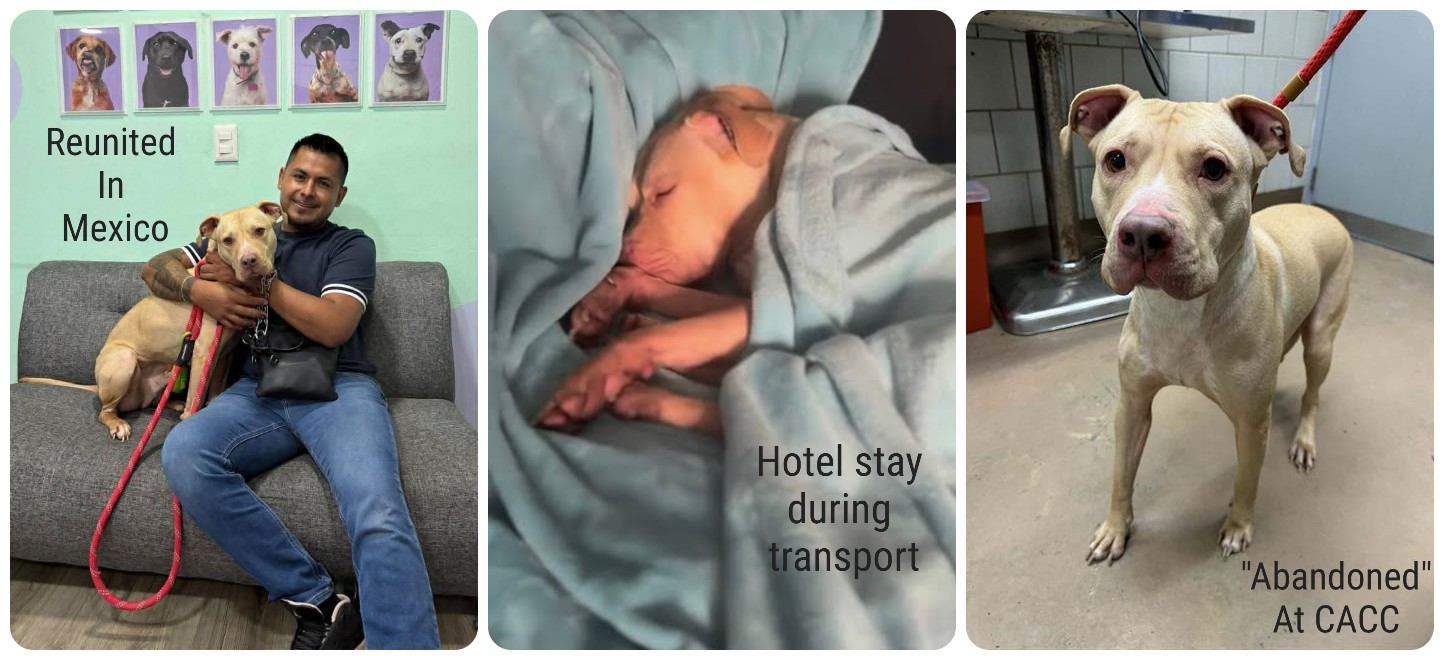
Man who self-deported to Mexico reunited with dog he left behind in Chicago

This is the kind of story that reminds us why every detail and every effort matters.

When Coffee arrived at Chicago Animal Care and Control, his microchip led to a disconnected phone number. That’s where our Microchip Hunters team stepped in. One of our dedicated volunteers went the extra mile, tracking down Coffee’s owner, Daniel, through Facebook only to learn he had made the difficult decision to return to Mexico and leave his beloved dog behind.

From there, an incredible collaboration unfolded.

Coffee was transferred to Border Tails, whose team immediately committed to helping. With the support of their transport partners, Coffee began a long journey across multiple borders, ultimately making his way back to Daniel in Mexico.

Because people refused to give up, Coffee is now back where he belongs.

This reunion is a powerful reminder:
✔ Microchips save lives—but only when someone is willing to dig deeper
✔ Collaboration between organizations makes the impossible possible
✔ Love doesn’t stop at borders

We are so proud of our Microchip Hunters team and grateful to Border Tails and all partners who made this reunion happen.

👉 Read the full story and video reported by CBS News here: https://www.cbsnews.com/chicago/news/daniel-torres-self-deported-reunited-dog-coffee/

👉 Read the full Facebook story here: https://www.facebook.com/LostDogsIllinois/posts/pfbid027AyRYrhMQX5f2AARSrJ7nka5Fvcq55oPn6tLARG1i1N2gGMbzPQ5n2hsgn9mp5sBl

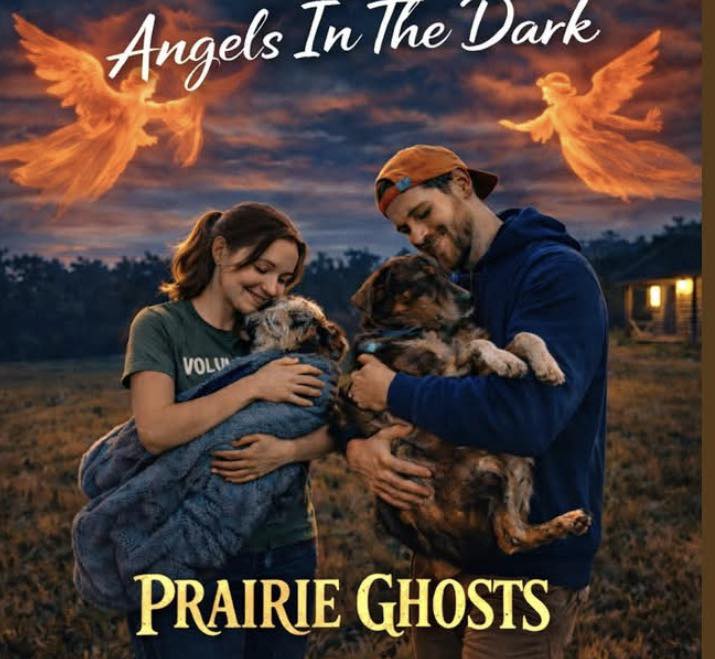
Angels in The Dark

This video, created by SmithicAir, beautifully complements a powerful and heartfelt song dedicated to all those involved in dog rescue in any capacity. It serves as an anthem dedicated to all the heroes involved in dog rescue, in every form. It stands as an anthem honoring your compassion and unwavering commitment.

Written by Donna Hoffman and performed by the Prairie Ghosts, the song follows their recent work on Apollo’s Journey and shines a light on the volunteers who work tirelessly to rescue dogs and reunite them with their families.

Watch the updated music video here: https://youtu.be/JHlBBLwBWJg

Mr. Spock Makes It Home Safe After Consulting Lost Dogs Illinois’ Best Practice Guides – A Letter From His Owner

Lost Dogs Illinois received this heartwarming email yesterday, and it moved us to tears!

Mr. Spock, or as his family refers to him, Spockie, went missing in Mars Hill, Nc on Tuesday 6/18 @ 4:30pm and was recovered around 5pm on 6/19 at the location where they lost him.

“I am reaching out to say thank you for your highly informative and helpful series of posts about finding shy and elusive dogs that enabled us to find our beloved dog, Mr. Spock.

My husband, Drew, and I lost our little guy on Tuesday when he jumped out of my car after a horrible car accident. Like Toby in the post, he had gone through a traumatic event, was in unfamiliar territory, and is by nature, weary of strangers. It felt like the odds were against us when we began the search.

We spent Tuesday evening and most of Wednesday morning searching by foot and by car , calling Mr.Spock’s name, and setting out fliers. It felt like we were going nowhere fast and we both began to lose hope.

I am a scholar by trade and learning is my superpower .So when I sensed our strategy might not be working, I decided to see what I could find out online . Your posts (Lost Dogs Illinois website) about finding shy and elusive dogs were BY FAR the most informative and instructive resources I found.

Based on what I learned, we set up feeding stations at the scene of the accident and a sighting location. We also switched from frantically calling his name to approaching the stations with calmness and quietness.

On Wednesday evening we went to check the feeding station by the scene of the accident, which happens to be by a local gas station. At the EXACT TIME we were there, someone from the gas station who had my number thanks to our fliers called me to say our dog had just been spotted AND the person who had seen our dog, saw my husband, and pointed the direction Mr.Spock was walking.

We knew from your posts to remain calm and not to panic. My husband followed our dog slowly on foot, resisting the urge to run, and threw me the keys so I could follow in the truck. Our dog turned down a sleepy side street, and my husband gestured for me to turn when I drove by.

Thanks to your posts I had a winning strategy for when I spotted him on the side street. I parked my truck far away and did not slam the door or rush. I opened a can of his favorite food and approached slowly. At first he was very hesitant, so I sat on the ground, and poured out the food. He started approaching after that, and suddenly realized it was me, and ran into my arms.

I do not think we would have been able to get him back without your posts. Not only did it give us helpful information about dog’s behavior when they are lost, but also a winning strategy and hope.

Thank you from the very bottom of my heart for sharing your resources so freely and please know that they really made a difference in our lives. Your strategies helped reunite us with our beloved Spockie in less than 24 hours.

P.S. Please feel free to share this email with anyone you like!

-With deepest gratitude”

We were honored to read this and hope others will check out our resources for ‘best practices’ in recovering missing dogs! Visit us at www.lostdogsillinois.org