
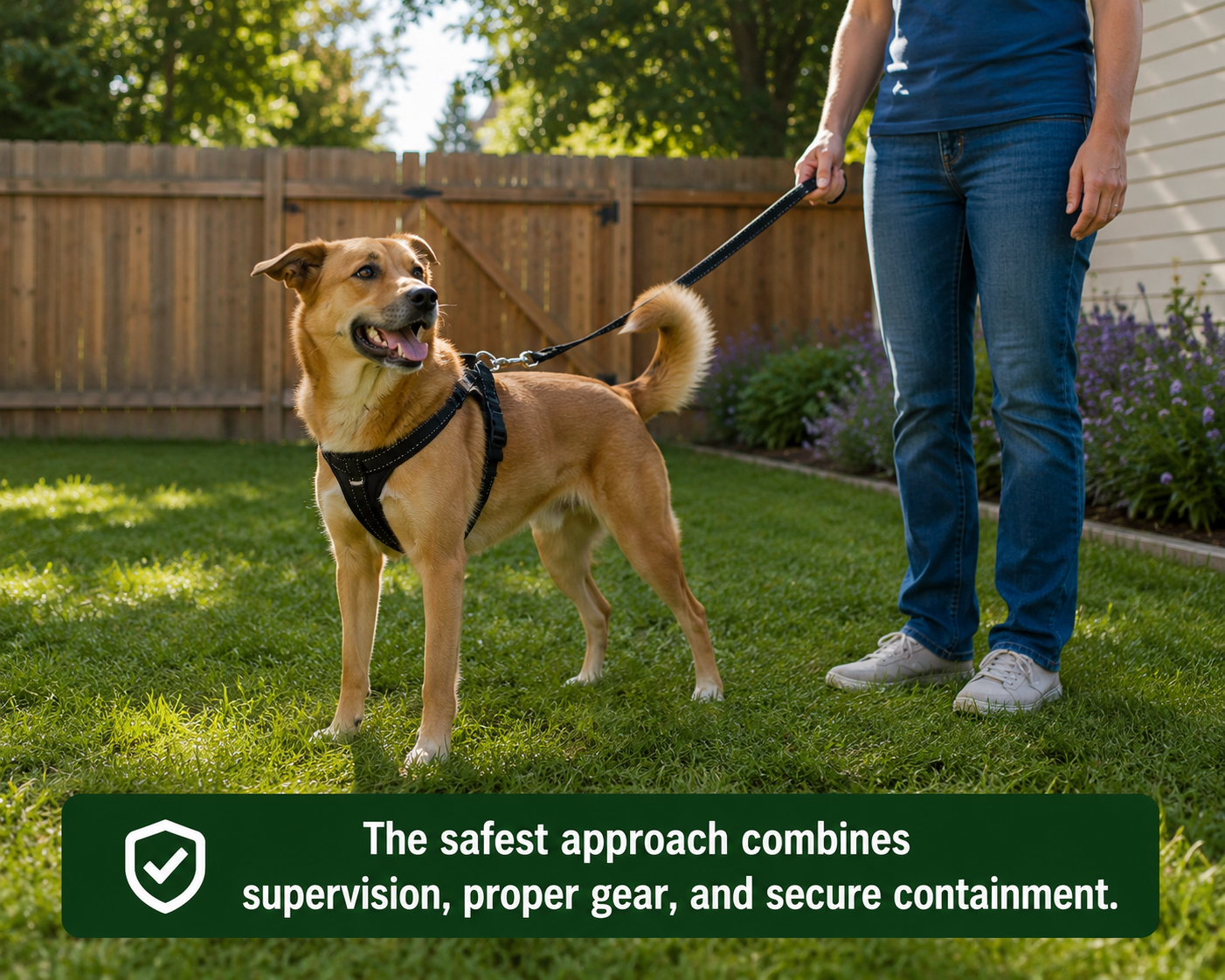
The most important rule: Never leave your dog unattended outdoors, whether you have a fence or not. Even the most secure yard isn’t a substitute for supervision.
Before You Worry About Your Fence: Basic Safety First
If you don’t have a fence, or even if you do, these fundamentals are your first line of defense:
- Never leave your dog alone outside – Even for “just a minute.” Dogs can escape quickly or become targets for wildlife.
- Use a properly fitted harness and collar – A well-fitted harness reduces slipping and is safer than a collar alone. Check fit regularly.
- Always use a leash – When outside without a secure fence, keep your dog on a leash. Consider a hands-free or long-line leash for supervised yard time.
- Ensure ID tags are current – Your dog should wear a collar with up-to-date contact information at all times.
- Microchip your dog – Make sure your microchip is registered and your contact information is correct and current.
- Supervise all outdoor time – Stay outside with your dog. This is especially important for dogs with high prey drive, anxiety, or a history of escaping.
If You Have a Fence: Make It Escape-Proof
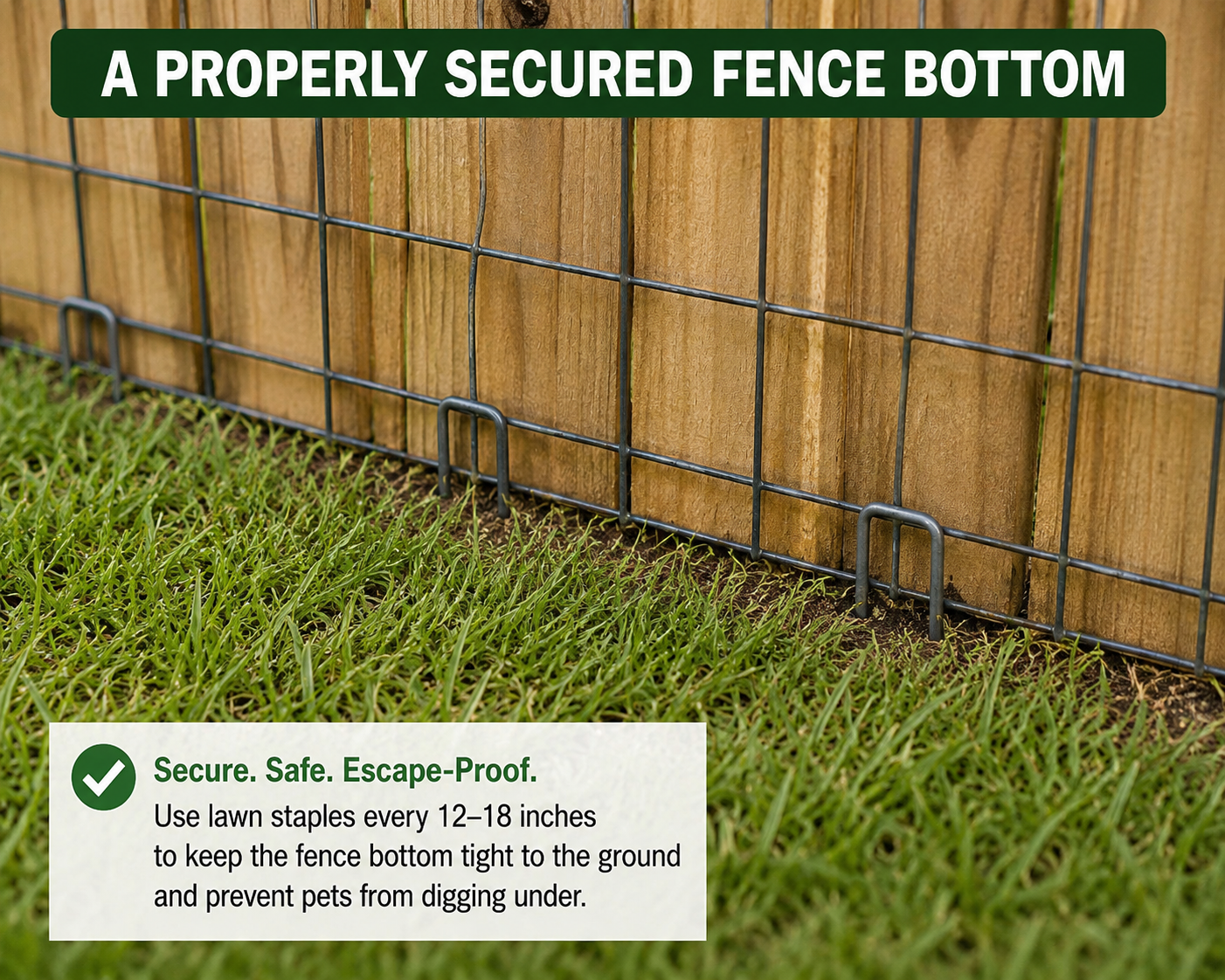
Most fence escapes happen in predictable ways—climbing, digging, squeezing through gaps, or pushing an open gate. Each has effective, affordable solutions.
Start Here: Quick Fixes You Can Do Today
Before making major changes, check for these common issues:
- Secure loose fence bottoms with lawn staples
- Patch any holes or damaged sections
- Remove objects near the fence (tables, dog houses, debris) that can help your dog jump
- Make sure gates latch securely; replace worn or loose latches
If Your Dog Climbs or Jumps the Fence
Some dogs are natural climbers or jumpers, especially when motivated by something outside the yard.
Solutions:
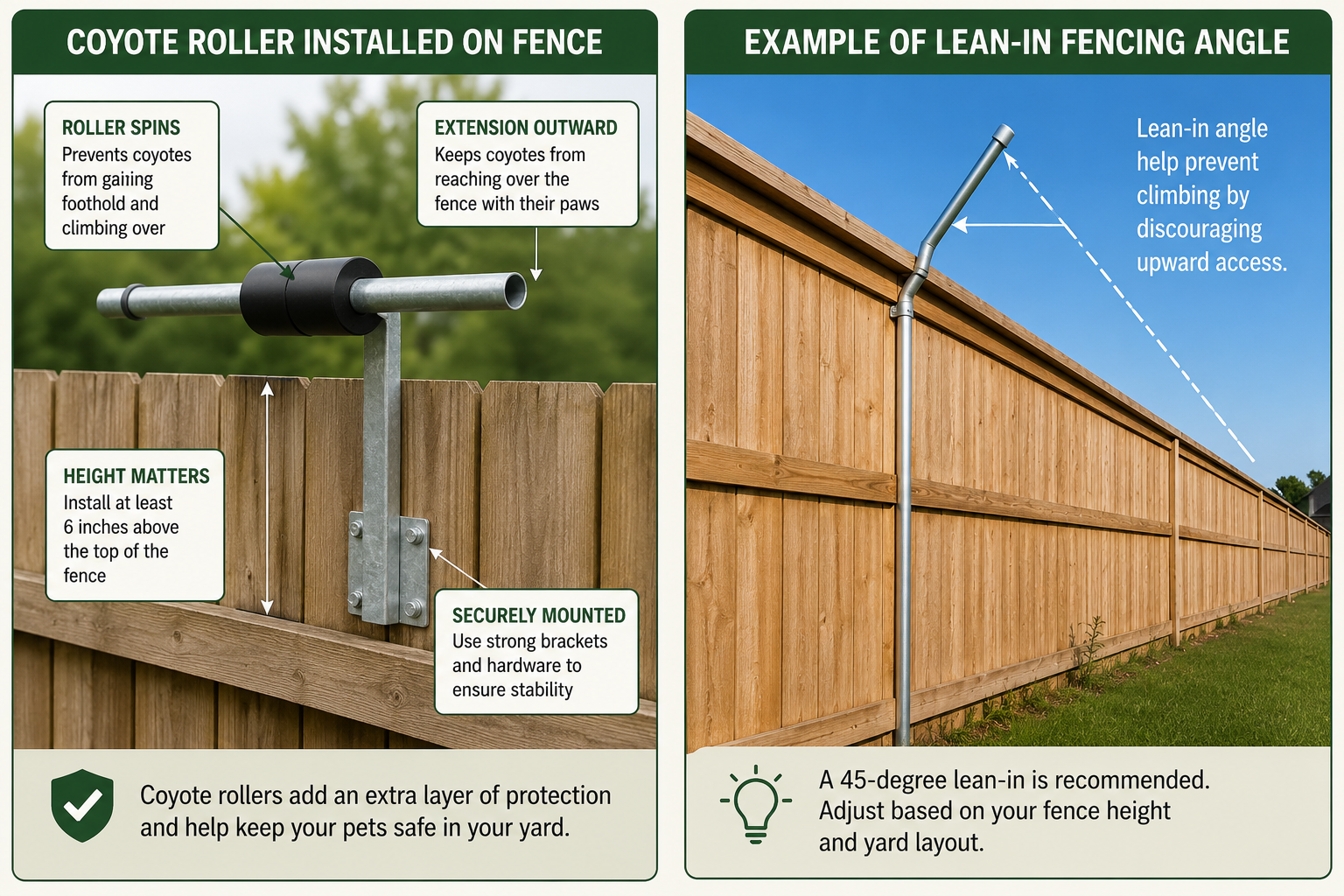
- Install coyote rollers along the top of the fence; they spin, preventing dogs from gaining traction. There are also less costly DIY methods to create coyote rollers using PVC piping that can be found online.
- Add “lean-ins” (angled fencing at the top) to block climbing
- Increase fence height with extensions if jumping is the main issue
These methods are also effective at keeping coyotes and other wildlife out.
If Your Dog Digs Under the Fence
Dogs often dig at fence lines due to boredom, curiosity, or smells on the other side.
Solutions:
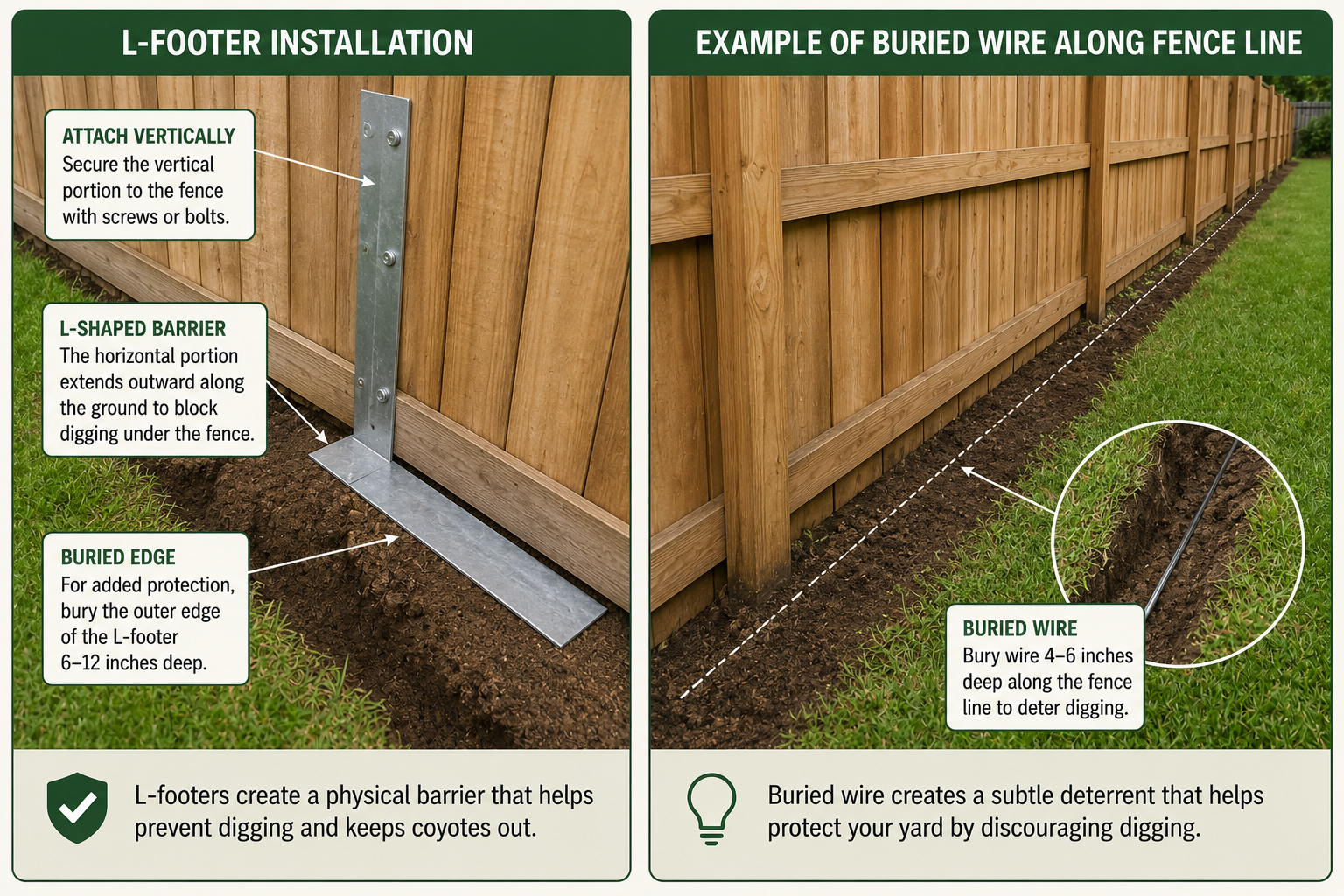
- Install an L-footer using welded wire:
- Attach it to the base of the fence
- Extend it outward along the ground in an “L” shape
- Secure with lawn staples
- Alternatively, bury welded wire slightly underground at an angle
- For persistent diggers, consider a concrete footer
Safety tip: Ensure any cut wire edges are turned away or smoothed to prevent injury.
If Your Dog Squeezes Through Gaps
Small or determined dogs can slip through surprisingly narrow openings.
Solutions:
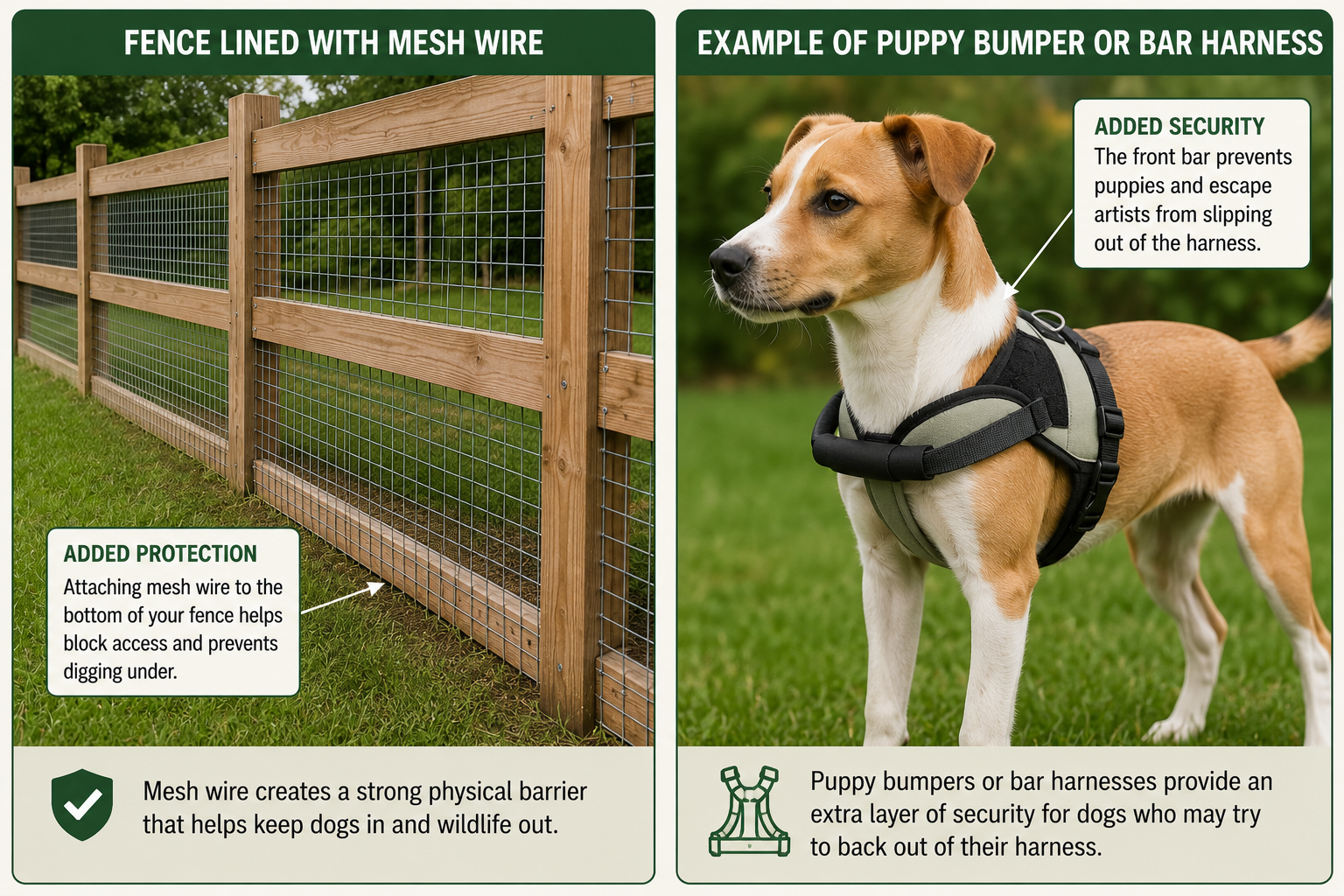
- Line the fence with welded or mesh wire (available in low-visibility options)
- Use bamboo fencing for a more decorative look
- Use a puppy bumper or bar harness (for supervised, short-term use only)
Note: Devices like bumpers should not be worn unsupervised and should fit properly.
If Your Dog Pushes the Gate
Gate escapes are one of the most common ways dogs get loose.
Solutions:
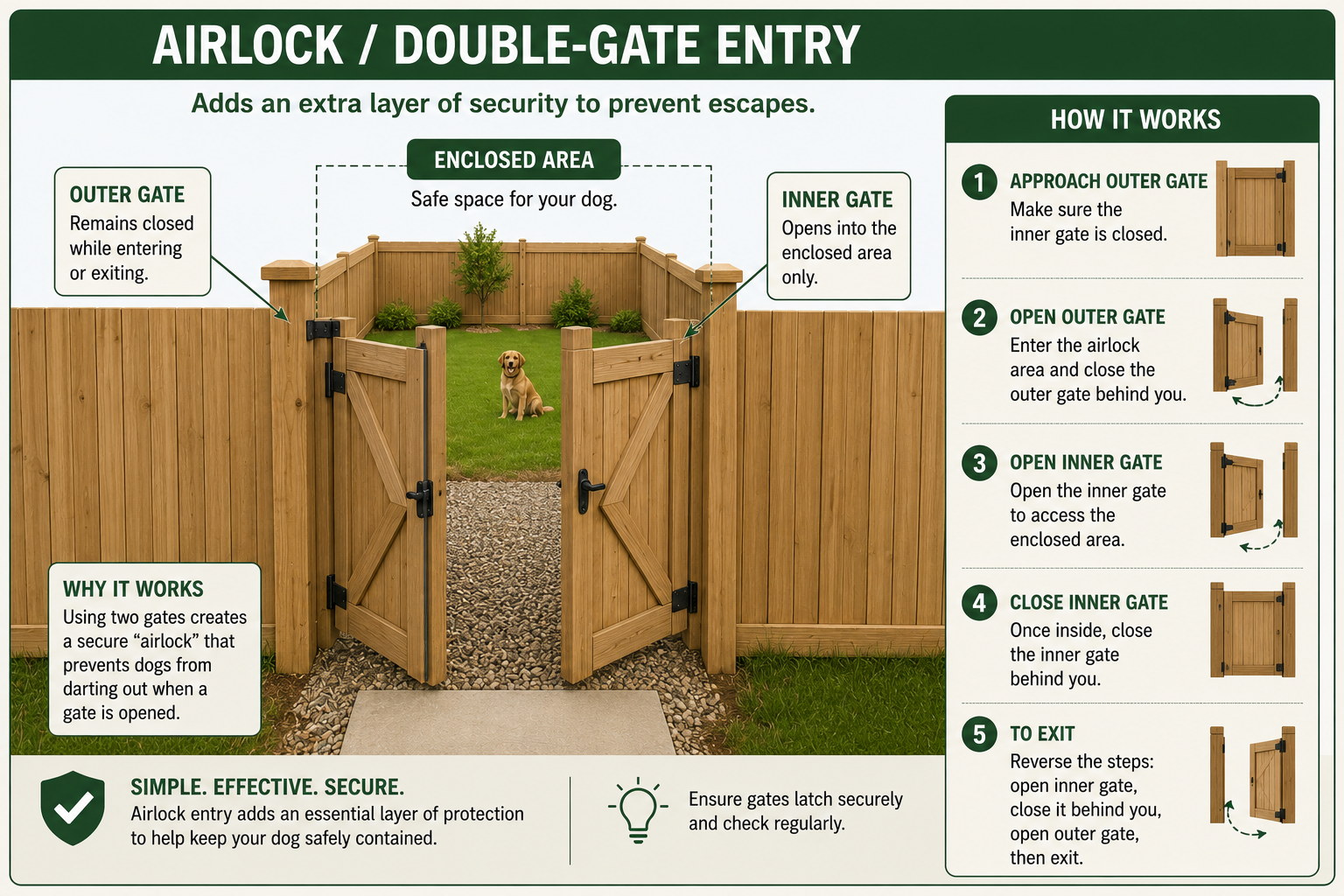
- Create an “airlock” or double-gate entry:
- A small enclosed area just inside or outside the main gate
- Prevents your dog from reaching open space if they slip past you
- Install secure latches or locks
- Using carabiner clips is a great way to keep gates securely closed, prevent accidental openings, and stop dogs from escaping. For the best results, avoid lightweight aluminum and choose heavy-duty locking carabiners or double-ended snaps to ensure the gate cannot rattle or be nudged open
- For indoor exits, use a baby gate as a secondary barrier
Keeping Wildlife Out (Important in Illinois)
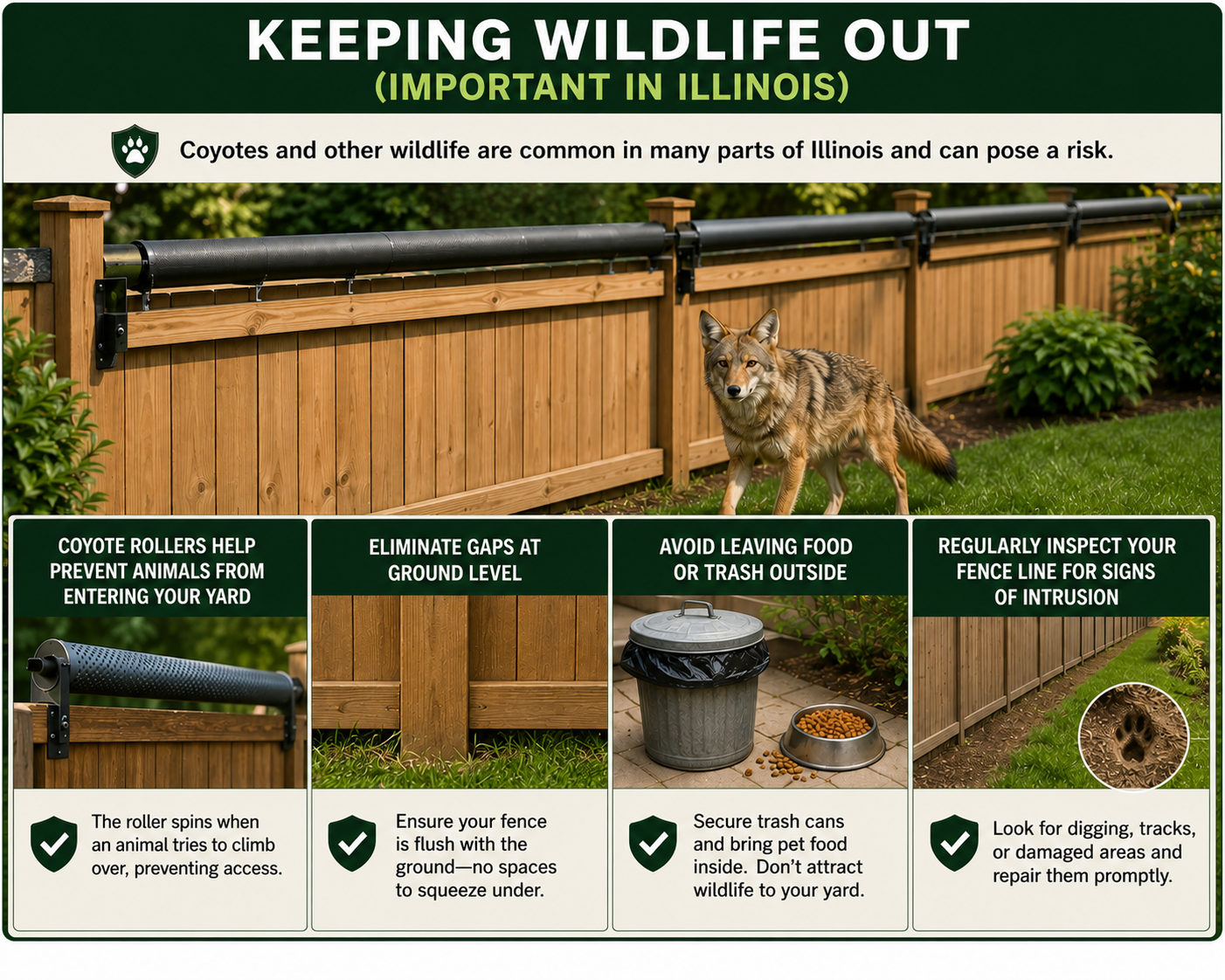
Coyotes and other wildlife are common in many parts of Illinois and can pose a risk.
- Coyote rollers help prevent animals from entering your yard
- Eliminate gaps at ground level
- Avoid leaving food or trash outside
- Regularly inspect your fence line for signs of intrusion
Safety Considerations
- Regularly inspect your fence for damage or wear
- Remove or cover sharp edges on wire or fencing materials
- Avoid leaving containment devices on dogs unattended
- Make sure all modifications are secure and do not create entrapment risks
When Physical Fixes Aren’t Enough
If your dog continues trying to escape, consider underlying causes:
- Increase daily exercise and mental stimulation
- Address anxiety or boredom
- Work on training, including recall and boundary awareness
- Supervise outdoor time for repeat escape artists
Preventing escapes not only keeps your dog safe but also protects them from traffic, wildlife, and getting lost. Most solutions are affordable and can be done with basic tools, making a secure yard achievable for nearly any home.