Your Trapping Supply List – Part 12 in a series

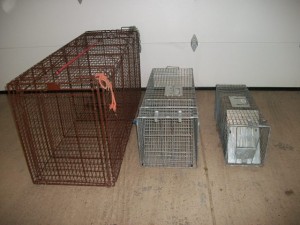
You’ve rented or bought your trap to catch your shy, lost dog. Now all you have to do is go out and throw it on the ground,  right?  And your dog will jump in, right? Sorry, wrong. Again preparation is the key and we’ll try to walk you through it step by step.

Many people give up trying to trap their dog in frustration and it is generally because they haven’t taken the time to do it properly.

Here is what you will need in your trapping supply kit:

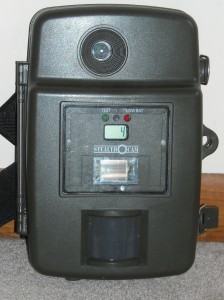
  • Trail camera and feeding station (should already be set up at this location)
  • Gloves
  • Flashlight
  • Flyers
  • Bungee cords and electrical ties
  • Something to entirely cover the trap floor like a cotton door mat, thin quilting or carpeting scraps (if it is too thick it will interfere with the trip plate mechanism
  • A large plastic tarp if you decide to cover the trap
  • A white washcloth to use as an indicator for when the trap is sprung
  • Scissors, packing tape and pliers
  • A padlock and length of heavy chain (from the hardware store)
  • Butter flavored Pam cooking spray
  • Small hatchet and pruning tools

Quietly unload your equipment and trap with only one or two helpers. Remember, your dog has been visiting this location to eat and he might be lying in the woods watching you right now! Keep your voices down, get the trap set up and then get out of there as quickly as possible. You don’t want to frighten him away.

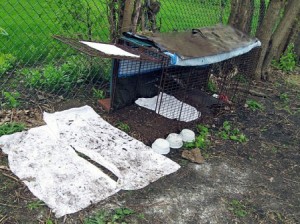
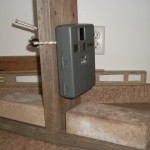
Choose your location based on what you learned in Part 12 of this series.  Clear any debris from the ground. You may have to prune a few trees or remove any small plants that will poke up through the bottom of the trap. Securely lock the trap to a tree or solid object using your padlock and chain.  The number one reason that shelters have stopped lending out traps is because they get stolen and not returned. Prevent that from happening and help the next person who has lost their dog and needs a trap! Make sure that everybody that is helping you has a key to the padlock or knows the combination.

In winter or inclement weather you will want to wrap the entire trap in a plastic tarp. This will provide your dog with shelter and prevent the bedding from getting wet.  Leave both ends open so the dog can see through. Roll the trap in the tarp and use your electrical ties to secure it to the wire of the trap. You will have to punch small holes in the tarp with your scissors to push the electrical ties through. Get it really nice and tight. You don’t want the tarp to flap in the wind and scare your dog.  Tape one of your dog’s flyers to the top so that anybody that stumbles across the trap knows what you are trying to do.

In summer, you might want to leave the trap unwrapped, for better air flow. It can also depend on the nature of the dog also. Some dogs enjoy the feeling of a “den”. Some will feel claustrophobic and prefer to feel like they have an escape route.

ALWAYS cover the entire floor of a trap. Lost dogs often have raw, sore, sensitive feet from travelling. They won’t want to walk on the wire floor. Make it easy and nice for them.  Spread your hands and push down on the floor covering. If you can still feel the wire through the covering, so can your dog. You need to make it thicker.  Make sure the floor covering fits well and doesn’t interfere with either the trip plate or the door. You might need to cut it with your scissors to fit. It shouldn’t hang out the front of the door.

If your dog has been lost a really long time and is in a very feral mode, you may want to use dried leaves or straw instead of something that smells too “domestic”.

Attach a  white washcloth in the middle of the door of the trap using electrical ties. This will enable you to see from a distance if the trap has been tripped.

Next, bungee the trap open. In the next installment of this series, you will see why.

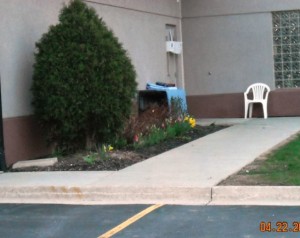
Sprinkle a few bits of hotdog around the front of the trap. Check your trail camera position to make sure that it will capture pictures of your feeding station and your trap. Ideally the two should be about twenty to thirty feet apart.

Give the trap and the ground surrounding it a light coating of Pam butter flavored cooking spray. This acts as a scent blocker and is very important if you have people helping you that your dog does not know. You can also buy scent blockers at hunting supply stores but Pam works just as well, is less expensive and readily available. Spray the area that you have walked on and back out of the area – lightly spraying it also.

Then get out of there! Your dog needs time to get accustomed to the look and smell of the trap. Don’t disturb him.

Notice, we didn’t discuss baiting the trap? That’s because we’re not ready to do that yet. In the next article, you will see why.  Part 13


Our tips, ideas and articles are based on information gathered from over thousands of  lost dog recoveries. Any advice or suggestions made by Lost Dogs of Wisconsin/Lost Dogs Illinois is not paid-for professional advice and should be taken at owner’s discretion.

Successful Trapping: Go Slow to Go Fast Part 13 of a Series

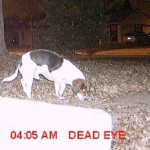
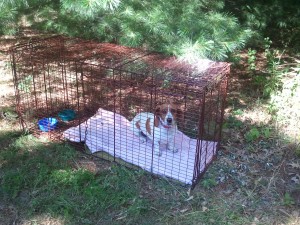
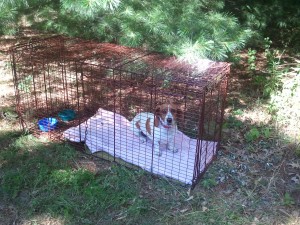
We can see that this dog, Shabby, is very comfortable with the trap. Time to move the food inside! When we can see her going in and out comfortably, THEN we will set the trap. Note that the date/time stamp on this camera is set wrong. Take the time to set it correctly before you begin. This is invaluable information.

You’re all ready to set up your trap and catch your dog. This should be fast and easy, right?   You’ve done all of the careful preparation and set up an inviting little “dog cave”. Your dog should appreciate that and jump right in, right? Sorry – wrong. This is the number one place that people are too impatient and then give up on the trapping process, claiming it “doesn’t work” or “my dog is too smart for the trap”.

Throwing a trap on the ground and hoping that your dog happens to jump in is like an outfielder closing his eyes and holding his ball glove open up in the air. Is there a chance that the ball will fall in it? Yes, I guess so. But there is a lot better chance of him catching the ball if he strategically uses all of his physical and mental powers to position himself to catch the ball.  Remember, you have ONE chance to get this right. Make it count.

This is where “going slow will be faster than going fast”.

You already have your shy, lost dog coming to the feeding station. You are already seeing pictures of him eating on your trail camera. (if not, please go back and read those installments in the series) You have now added the trap to the “landscape” and it may take a few days for your dog to get accustomed to it. He will sense that something is different and strange. Your goal is to make that transition as easy as possible. Keep the feeding station at least 20 – 30 feet away from the trap at first. Use bungee cords or electrical ties to keep the trap open – so the door can’t come crashing down and scare him.

If you have a trap with two doors, you may want to remove the rear door so the dog can go all the way through at first. This helps with very claustrophobic dogs and encourages them to use the trap as a shelter and sleeping spot.

Watch your pictures. When he is eating at the feeding station comfortably, move the bowl closer to the trap. When he is comfortable with that – move it closer again. Within a few days, you should be able to put the food under the door of the trap. (that is the scary part for a lot of dogs). When he appears comfortable, move the bowl into the trap – just inside the entrance. But you still have it bungeed open. It can’t scare him. Finally move it to the back of the trap behind the trip plate. When you see that he is going all the way in the trap, eating and looking relaxed, you can set the trap. You should know what time he is coming to eat and you can set it just for that time period.

The above method called “luring the dog into the trap” will save you a lot of grief and frustration because:

  • you won’t be catching and endangering wildlife, cats and other dogs
  • you won’t be spending all your time cleaning the trap and washing and replacing the bedding after catching other animals (who will usually urinate and defecate in the trap)
  • you won’t be having to check the trap every couple of hours (possibly causing your shy, lost dog to abandon the feeding station)
  • you will encourage your lost dog to use the trap as a shelter, so when he is finally trapped he will be comfortable and not panic
  • you will be able to continue during extreme hot or cold weather because you won’t be worried that you will endanger the life of an animal that is caught

Okay, we’re almost done. The last section will talk about baiting the trap, what works and what doesn’t work. Stay tuned, you’re almost done!  Part 14

Our tips, ideas and articles are based on information gathered from over thousands of successful lost dog recoveries. Any advice or suggestions made by Lost Dogs of Wisconsin/Lost Dogs Illinois is not paid-for professional advice and should be taken at owner’s discretion.

Baiting the Humane Trap – Part 14 in a Series

Finally! You have your humane trap for your shy lost dog set up. You have been feeding him at a feeding station and know his routine. He is comfortable with the trap being there because you have made it “part of the landscape”.  You have been moving the bowl closer and closer to the trap and finally under the door of the trap. You are monitoring the progress from the pictures on your trail camera.

Still, for some dogs, taking the risk to go into the trap is a big step. It is scary. The longer they have been lost, the more distrustful they have usually become.

So baiting the trap with something absolutely scrumptiously delicious is important. There aren’t any hard and fast rules except one. Think SMELLY.  You want the smell of the food to be so wonderful, so delectable, that your dog is willing to take the risk.  This means no dry dog food! Dry dog food is not smelly. For some reason that we have yet to figure out, people want to put dry dog food in a trap. Sorry, it just doesn’t work well. We don’t care if it is the ultra premium dry dog food that costs $60 a bag and your dog gobbles up at home. It doesn’t have the sort of smell required to encourage your dog to take the risk.

So here are some better suggestions that have worked for us.   We are sure you will also come up with some on your own:

  • rotisserie chicken from the grocery store (removed from the bone)
  • Kentucky Fried Chicken (removed from the bone)
  • grilled bratwurst
  • canned tripe (the brand pictured above is available at many specialty pet food stores)
  • fresh green tripe (available from speciality pet food stores)
  • inexpensive canned cat or dog food (generally the cheaper the food, the smellier it is)
  • meatballs in BBQ sauce

The possibilities are endless. Walk through the hot deli section of your grocery store and sniff. What smells delicious? What smells irresistible?  Remember, a dog’s sense of smell is at least 100 times better than a human’s. So you have the ability to draw your dog from a really long distance if you choose something smelly. Change it up. If something isn’t working and your dog doesn’t appear willing to “take the risk” try something else. Always make sure that your dog is getting some food at the feeding station though. You don’t want him to abandon the location out of frustration and move on.

Imagine you are in a restaurant and you haven’t eaten all day and are starving. The service is slow and nobody has come to take your order. The waiter passes by your table with a plate of steaming hot fresh rolls. He is distracted and you think: Maybe, just maybe I can sneak a roll off the plate and he won’t notice.  You are “willing to take the risk”. That’s how you need your dog to feel.

If your dog is getting food from other sources also (very likely); you have to make sure your offering is better. You may have to find the other food sources and cut them off. This can be tricky and we’ll cover this in more detail in another article. But, regardless, you will have the best chance of success if you are offering the most delicious food that your dog has smelled in a long time.

Remember, don’t set the trap until you have seen on your trail camera pictures that your dog is comfortably going in and out and eating. This is your best chance for success and is much better than a hit or miss attempt which can scare your dog, and make him abandon the location. Then you have to start all over again somewhere else.

Toby, that shy Australian Shepherd who bolted from the sound of fireworks will be safely caught soon because you have carefully and patiently followed all of the steps to catch a shy, elusive dog. Good Work!  Part 15

Our tips, ideas and articles are based on information gathered from over thousands of successful lost dog recoveries. Any advice or suggestions made by Lost Dogs of Wisconsin/Lost Dogs Illinois is not paid-for professional advice and should be taken at owner’s discretion.


Checking the Trap – Part 15 in a Series

Have enough leather gloves for everyone that is helping you with checking the trap. This protects them AND your dog.

If all goes well and you have prepared carefully by following the steps in the previous articles, you may catch your dog very quickly! Or not.

Regardless, make sure that you are prepared when you head out to check a trap. Always carry these items and if somebody is helping you, make sure they have them also.

  • Leather Gloves
  • Cell phone
  • Bungee cords
  • Fresh bait
  • Fresh scent items
  • Fresh bedding
  • Pam cooking spray to block scent
  • Binoculars
  • Flashlight
  • Key to unlock the trap from the secure object it is affixed to
  • Plywood, large enough to slide under the trap.

Approach the trap quietly with your leather gloves on. If you have used the white washcloth on the door of the trap, you should be able to see from a distance if it has been tripped. Or you can use your binoculars. If you get closer and see your dog inside, speak quietly to him and make what ever phone calls are necessary to get the help you need to lift the entire trap and dog into your vehicle to transport him to a secure location, preferably a vet clinic. You may want to slide a piece of plywood under the trap to make sure the wire floor doesn’t give way or bend when you lift it.  Remember, you will be responsible for any damage to the trap when you return it.

Bungee the doors tightly closed (both front and back if the trap is a two door model). You don’t want a door to pop open when you are lifting the trap into a truck. Remember, this is very scary for your dog and he may struggle in an attempt to escape.

NEVER attempt to take your dog out of the trap. If he slips by you and escapes, you may never trap him again. Remember, your dog has been in survival mode. He may not recognize you or be happy to see you. He may do everything in his power to flee the area, including biting you.

When your help arrives, give them leather gloves to protect their hands and YOUR dog while you lift the trap. If your dog bites someone and they require medical attention, your dog may have to go into quarantine. Don’t put him through this stress – he is already dealing with enough! If the dog is a foster dog, he may lose all chances for adoption if he bites someone; and he may lose his life. Don’t take this chance! You can avoid a bite that breaks skin by wearing gloves.

Take your dog to the veterinarian as soon as possible! Many lost dogs will have internal parasites (worms) and ticks. They may have been exposed to tick-borne diseases such as Lyme Disease or Ehrlichiosis and your vet may recommend putting them on a course of antibiotics as a preventative measure. Also, your dog may be  dehydrated. Your vet will give you good advice on how to rehabilitate him and get him back on a regular schedule of food and water.

If there is an animal other than your dog in the the trap, don’t despair! This is very common and has absolutely no bearing on whether you will trap your dog. Again, with your gloves on, unlatch the door and pull it open. Slip a bungee on it to prop it open and walk away. Go sit in your car and drink your coffee or check your emails. When you come back, whatever was in the trap will be gone. You will have to clean out the trap and refresh everything. Also, give it a light coating of Pam. This will block the scent of the animal and make it more enticing to your dog.

If you have caught your dog, congratulations! You have worked hard to successfully capture a shy, lost dog and we now ask that you pay it forward and share what you have learned with others that are going through this frustrating process. If you have not caught your dog, stay tuned, because in the next set of articles we will cover what can go wrong and recommendations that may help.

Our tips, ideas and articles are based on information gathered from over thousands of successful lost dog recoveries. Any advice or suggestions made by Lost Dogs of Wisconsin/Lost Dogs Illinois is not paid-for professional advice and should be taken at owner’s discretion.


Why We Say “Never Give Up”

Never Give upOur motto is “Never Give Up”.  It seems obvious, but there is an underlying reason that we say it. We know that dogs can be recovered weeks, months and even years after they go missing. The key factor in a successful recovery is the emotional commitment of the owner or responsible party to have the perseverance to keep going.

We often hear the comment “If my dog were missing, I would never give up.”  But, the average bystander doesn’t realize the enormous pressures that are placed on the lost dog owner.

Today we are going to discuss some of the factors that make an owner give up the search before their dog is recovered.

1. Financial commitment – looking for a lost dog is costly. Printing flyers, signs, advertising, gas money, and lost wages can add up quickly.

2. Time commitment – Door to door flyering, making signs, visiting shelters, checking out leads and manning feeding stations and traps can be a full time job.

3. Pressure from family and friends – This is often related to the two factors above.  Family and friends who aren’t as emotionally committed to the dog as the owner may start to resent the amount of time or money expended in the search. The family may want their lives to go back to normal; instead of  spending every free moment or spare dollar looking for the lost dog.

4. Emotional burnout – The highs and lows of sightings and possible leads take an emotional toll on an owner already stressed and frantic about their dog’s disappearance.

4. Myths and misconceptions -Well meaning but uneducated people, often co-workers and neighbors;  may diminish an owner’s hope by spreading rumors and misconceptions. These include saying things like:

  • a coyote (eagle, hawk, wolf) probably got your dog.
  • your dog was probably stolen for research
  • your dog was probably stolen for dog fighting bait
  • your senior dog probably went away somewhere to die

Although we never say never; we have found the four things listed above to be exceedingly rare. But these rumors spread like wildfire and discourage owners, causing them to give up hope. Unless physical evidence is found that a dog is deceased; the dog is probably very much alive and relying on their owner to bring them home. Never doubt a lost dog’s resourcefulness or ability to survive.

Are you perpetuating these rumors?  Please carefully consider your words and actions. Are you unintentionally causing people to give up hope? Let’s all work together to get more lost dogs home.

The Problem with Dandelions

One of LDOW’s long-time volunteers has coined a clever name for some of our missing dogs.  She affectionately calls them  ”dandelions” because they are common and they all look alike.

The problem with dandelions is that they can present a real challenge to their owner when they get lost. Here is the list of most common dog breeds in America according to the American Kennel Club:

  1. Labrador Retriever
  2. German Shepherd Dog
  3. Beagle
  4. Golden Retriever
  5. Yorkshire Terrier
  6. Bulldog
  7. Boxer
  8. Poodles
  9. Dachshund
  10. Rottweiler
  11. Shih Tzu
  12. Miniature Schnauzer
  13. Doberman Pinscher
  14. Chihuahua
  15. German Shorthaired Pointer

So if your dog is mentioned above and he has no distinguishing coat color or markings – you have a dandelion. If he is also a friendly dog and fits our profile of theHappy Wanderer, you really have your work cut out for you. For instance: consider the Labrador Retriever. They are the most popular breed in America. Many people own them or want them. They look alike, especially to the average person who may not see slight differences in coat color or small markings. They are often friendly and may travel a long distance. If they are lost in a rural area they are often assumed to be wandering farm dogs and sighting calls may be few and far between. This puts them at a very high risk of being picked up and kept, rehomed or ending up at a shelter and adopted out to a new family before the owners can find him.

If your lost dog is a friendly “dandelion” consider these extra steps to help you get him back home safely. Give out details about your dog. (Sometimes we advise against this. But in the case of dandelions you have to carefully weigh the risks. Is there a better chance that somebody might see and recognize your dog or that somebody may falsely try to reclaim your dog?) Is he or she spayed or neutered? What is his age? What was the color of the collar he  was wearing? Does he have any birthmarks or scars? You will need to make it EASY for the shelter staff and public to help you.

Contact and keep contacting shelters, stray holding facilities, and vet clinics in a hundred mile radius. Your dog might have been picked up and taken to a shelter far away. Get the public emotionally involved in the story of your missing dog. Make your dandelion stand out from the other dandelions in the minds of the public, vet staff, shelter staff and volunteers, animal control officers and police officers.

Flyer, flyer, flyer some more. Use intersection signs strategically placed to catch the eye of passing motorists. Increase your range of flyers and signs by five miles a day.  Whether a lost dog is still simply lost and confused or has been picked up – the key to getting them safely back home is to generate sightings.

Never give up! Your “dandelion” is out there somewhere depending on you to bring him safely home.


-Lost on the 4th of July

In a few days our nation will celebrate its birth and with that celebration comes many things: family picnics, out of town visitors, vacations, and, of course, firework displays.

And while all of these things are wonderful ways to pay tribute to our independence – each of them are also great contributors to how dogs get lost. 

Let’s take a look at them so we can better prepare for the events when they happen.

Family picnics and out of town guests

These occasions infer that people will be coming to your home and with that means the possibility of someone leaving the front door open or the gate unlocked just long enough for your dog to runaway.  People who are unaccustomed to living with your pets are unaware that your dog takes after the cat next door or the squirrel in the backyard.  Or, perhaps, they are just not used to paying attention to any pet because they simply do not have one.

It is hard to control what your guests do while they are in your home.  So, the best thing is to control your pet.  This might mean boarding them at a facility while you host your guests, crating them or locking them in a room in your home: keeping them away from an unfortunate opportunity to run away.  Even a dog who isn’t a “runner” can wander off when left unattended so it is best to play it safe and know your dog’s whereabouts at all times.

Vacations

Many people across the states will pack up their cars and take road trips and if you are like many of them, you will be bringing your dog along for the ride.  Where you head to and stay doesn’t matter- the reality is such that many dogs along for vacation get lost and getting lost away from home is cause for panic.

 Whether it be staying at a family’s house or at a campground – losing your dog in unfamiliar surroundings is horrific. 

 Since locking them up in a tent doesn’t make a lot of sense – there are a few things you can do to protect them before they get lost:

Harness them.  Instead of a just a collar that can easily be pulled off if they get the urge to run, use a harness along with a collar.  Of course on that harness and collar make sure you have up to date ID tags and that they list your cell phone number.  Your home phone number doesn’t do a bit of good if you are not at home.  It is also smart to make sure that your dog is wearing its up to date rabies tag.  This assures anyone who finds your dog that he is current on vaccines.  It is also a good idea to keep current vet records in your car. 

Microchip them.  A physical ID tag is number one – but a microchip can save your dog’s life.  Your local vet can do this or there are many microchip clinics offered through rescues and shelters and pet product stores.  If you already have a microchip, it never hurts to have a vet or shelter scan your dog to make sure they can find it and that it is registered for the right dog and to YOU.

Fireworks

I don’t think there is anything else in the world of dogs that has as profound affect on them like fireworks.  Rarely, have I seen a dog who doesn’t tremble at the first sound of a bottle rocket or the bang of a small firecracker.

Fireworks are terrifying to dogs.  And there is little to nothing anyone can do to console them. 

And when dogs react to fireworks, their first reaction is to run and they will run anywhere.  Dogs afraid of fireworks are not planning an escape – they are purely reacting to something.  And that means their reaction is bound to be quick and random. 

No matter how trained a dog is – all dogs should be inside for fireworks and it is even better to have them kept safe in a secure room of the house where no one can accidentally let them out.  A place where they can hide under a bed or couch and away from the noise is ideal.  Turning on the TV, radio, fan and/or air conditioning can help quiet the blasts of the fireworks.

A lost dog amongst a night of fireworks is like a ball in a pinball machine.  It will bounce from one place to another without rhyme or reason.  This can mean your dog will be running into busy streets, unsafe areas and  possibly running for miles – getting more and more lost with each knee jerk reaction to the loud booms.

We would all like to believe that our dog is like Lassie or Benji or the crew from Homeward Bound.  That regardless of where their four legs take them – they will eventually make their journey home.  But the truth is – this is not the case.

It is up to us as their family to keep them safe and out of harm’s way.  We, as humans, must protect them and think smarter and plan ahead for what events and situations might be coming our way. 

It only takes the first firework or the one guest to open the door to lose our dogs forever.  Make sure that doesn’t happen this 4th of July.

Becky Monroe

www.tailsandtruths.blogspot.com/


Finding Finn, an Interview With Susan Hennis

On March 31, 2012 Finn, a two-year-old Brittany, escaped from a vehicle in a parking lot in Joliet while being transported to a foster home in Canada by the group National Brittany Rescue and Adoption Network (NBRAN). Finn quickly became somewhat of a celebrity as hundreds of volunteers across several counties in Illinois followed his story and eventually assisted in his rescue. After two-and-a half months on on the loose, they captured him in a trap set at the home of a woman in Romeoville who had been feeding him.


NBRAN Coordinators Cathy and Susan, both of whom have been fostering for about 11 years, created a Facebook book page dedicated to his rescue and heavily utilized Lost Dogs Illinois’ tips and networks to eventually bring him to safety. They had a stealth plan of setting up cameras and relying on sightings across several towns. Volunteers were told not to call or chase him and instead call them with tips and photos. They set up video cameras which helped them track his feeding and traveling patterns.

I caught up with Susan Hennis to talk about her journey finding Finn.

Was it hard to resist the urge to call for him or chase him?

It was extremely difficult not to call and chase Finn — in fact, we did at the beginning. We were calling him all the time and trying to find him. It was at the advice of Lost Dogs that we stopped trying to call him as well as encouraging others to not call him and chase him.

How did it feel when you saw videos and photos of him while he was lost?

It was so amazing to see photos and video of Finn while he was lost. The first actual photograph was from a Forest Preserve Officer in the middle of May- we had sent them a flyer probably a month or more before that time and he had kept it. He called me right after he saw Finn and had taken a few photos with his phone.  It was reassuring to see that 1) it was him and 2) he looked okay. Anytime you rely on sightings you have to hope that the people are truly seeing the dog you are looking for. The video was shot shortly before he was caught and it was also so appreciated…it was crazy to see him looking so confident and on his mission. And to see that he moved like we remembered and it was really Finn that was in that area.

How does it feel knowing so many community members, most of them strangers, I assume, helped in the rescue?

It was very touching and also crazy that so many community members- in multiple communities- got involved with “Help Find Finn.” It started from the very beginning…Finn got loose on a Saturday and a woman (who heard about Finn through a few other people) emailed me to ask if it was okay if she went to look for Finn. Finn got loose in Joliet- I live in Normal and the other coordinator lives in Earlville. I was so completely thankful that a stranger who did not know Finn, me or NBRAN was willing to spend time looking for Finn. That woman looked for him four times that week…she hung flyers, searched and left dog food. As we went from community to community we met so many more wonderful people who offered to help. People hung signs, told their neighbors, called newspapers, arranged radio interviews, actively searched, ran out at the drop of a hat when we got a sighting. I was continually amazed that we were so blessed to have so many people interested in Finn’s story and willing to help.

How quickly did you get over 400 likes on the “Help Find Finn” Facebook page?

We got likes on our FaceBook page a number of ways…initially it was really word of mouth. As more signs and flyers were hung and newspaper articles were written people became really interested in Finn’s story. He spent a considerable amount of time in Channahon and Minooka and then a long time in Romeoville and I think we really gained a lot of likes during that time…but there were also others that were “Finn Fans” that lived a distance away.

What kind of support did you get from Lost Dogs IL fans on our page? How did having Lost Dogs IL as a resource help you feel supported?

We received a lot of wonderful support from Lost Dogs of IL.  As I  mentioned, we really knew very little about finding and catching a lost dog…in addition, Finn was a different story since he was a rescue dog lost on a transport — he didn’t know where “home” was.  LDI gave us a lot of welcome advice from the very beginning. They provided advice on how to get the word out, how to post signs, how to use a live trap, how to get a dog used to an area…LDI also kept us hopeful when we were down by being extremely supportive. It was hard when we wouldn’t get sightings for a while and LDI would give us stories of other dogs found after a long time. LDI also really stressed that most dogs won’t starve to death, die in a storm or get attacked by an animal…most dogs get hurt when pursued (running into traffic etc.).  I don’t think we would have gotten Finn back without the advice of LDI.

Have you thought of any steps to prevent a dog from running away that you can share with other dog owners?

Cathy and I have both talked about making sure all dogs on a transport have two very snug collars that are linked to separate leashes. We have also obtained large tags with phone numbers and “rescue dogs” on them. If we learned anything from this is that ANY dog could run — Finn was not a runner and was a “model” foster dog. After being found he quickly adapted to being in the home and is as adjusted as any dog. What I would share is never assume your dog won’t run. Treat all of your dogs as potential flight risks and take all opportunities to keep them safe. Aside from teaching them commands, make sure anyone in your home is aware of the dogs and not opening doors around them or giving them the opportunity to escape.

Siblings to the Rescue! Scruffbug’s Story

Scruffbug spent her first nine months living huddled with her two brothers in a small cage at a commercial breeding operation. When the Almost Home Foundation rescued them, the dogs were understandably very timid. Dogs bred in puppy mills and by “backyard breeders” are kept in cruel conditions, spending all of their lives confined in wire cages and having no human companionship, according to the Humane Society of the United States. Cathy Slaski, one of AHF’s volunteers took in the youngest of the three to foster because, as an experienced dog foster parent, Cathy noticed the little female needed extra attention and care. She gave her probably the cutest name ever: Scruffbug.

The next day, Cathy says Scruffbug was ecstatic to be living a normal life. She was getting along fabulously with her five new playmates, who were chasing each other around the yard. “The sun was shining and birds were singing. I set up a baby pool for them to splash in,” remembers Cathy. But then, “In the blink of an eye, 1,2,3,4,5- OMG the 6th dog is missing! Tiny little Scruffbug somehow managed to escape,” she says.

Cathy quickly rounded up a search team of golfers and employees of the course next to her house. They drove around in their carts (even the beer cart driver) looking for the shy dog. Certainly, it was a tough task. Just one day after being rescued from a life spent in a tiny cage, Scruffbug had to be terrified, so she was highly unlikely to answer to their calls. Cathy called the police, posted Scruffbug on Lost Dogs Illinois and used tips on our Lost Dog Search Action Plan. Her fellow AHF volunteers helped her post almost 50 flyers in the area.


Cathy received calls throughout the day from people who had spotted the dog near the golf course but weren’t able to get close enough to catch her. As the sun was about to set, she started to get really worried. The volunteer team brainstormed and what they came up with was nothing short of inspiring: Scruffbug’s brothers were called to assist in the rescue.

They put the brothers in two separate crates and set up one in the front of the house and one in the back. Everyone gathered around the windows from inside the house, hoping the scent and calls of her brothers would do the trick. Cathy remembers, “It was just beginning to get dark so I went to put on the backyard spotlight. It had to be under 5 minutes when I spotted her through my bedroom window- sitting right by the crate in the backyard!” The rescue team, everyone with tears in their eyes, watched out the living room window as Cathy slowly coaxed Scruffbug close enough to get a hold of her. “After 8 hours of searching, we lured her back with her sibling bond,” says Cathy.

Using other dogs to lure a lost dog is often a successful tactic. Because her brothers were the only familiar thing in her life, using them was an especially smart plan in this case.

Scruffbug, Brill and Gilly (not pictured) are available for adoption. Visit Almost Home Foundation’s website, www.almosthomefoundation.org for more information.

*Photo courtesy of The Puppy Mill Project

What Do Lost Dogs Eat?

bird feederMany owners worry that their lost dog will not find enough to eat. A couple of things to remember: dogs (like people) are omnivores; not carnivores (like cats). Dogs can survive without meat (of course they would prefer meat, but they don’t need it).

When you are looking for your missing dog, keep in mind that these readily available food sources are where your lost dog could be eating:

  • outdoor cat food (someone feeding barn or feral cats)
  • spilled grain around feed bins at farms
  • bird seed from bird feeders
  • corn fields
  • vegetable gardens and fruit trees
  • restaurant dumpsters and cooking oil dumpsters
  • convenience and grocery store dumpsters
  • trash cans at picnic areas, rest stops, parks and campgrounds
  • fire pits at campgrounds
  • nuts, berries, grass, horse poop (and other sources of animal waste)
  • barbecue  grills (they lick the drippings under the grill)
  • mice and rabbits, eggs in waterfowl nests, chicken eggs and chickens
  • road kill, hunting remains, fish guts and heads
  • food processing plants or pet food processing plants
  • feed mills
  • June bugs, earthworms, grasshoppers

Use your nose! If you can smell it, your dog definitely can. Even though he may not be getting food from the nearest fast food restaurant or steak house; he will keep checking in there, lured by the smell; to see if any tidbits have been dropped. Leave a flyer and talk to the restaurant staff at every restaurant in a 10 mile radius of where your dog was last seen.

Don’t give up! Your dog has the instinctive ability to survive for weeks, months and even years on his own.