Harnessing The Energy – Part 2

How can rescues and shelters prevent  high flight risk dogs from escaping from new adopters, foster homes and even their own facilities? And how can they correctly react when a dog does go missing?

These next few articles will focus on this, starting on how a shelter or rescue can prepare their staff, foster homes, and new adopters for high flight risk dogs.

1. Microchip every dog as soon as it becomes available for adoption, and ENROLL the microchip to the new owner. Some microchip companies do this for free, others have a charge. Offset the cost by adding the enrollment charge (if there is one) into the adoption fee. Simply sending the dog out the door with the paperwork is not enough. Most people have good intentions but may lose the dog before they get the microchip paperwork sent in. They may have just plunked down several hundred dollars for an adoption fee and supplies. The microchip paperwork may get set aside until the next payday and by then it might be too late.

2. Put visible identification on every foster or newly adopted dog before it leaves. ASPCA research shows that 89% of newly adopted pets were still wearing the tags a shelter or rescue put on them six weeks after adoption.

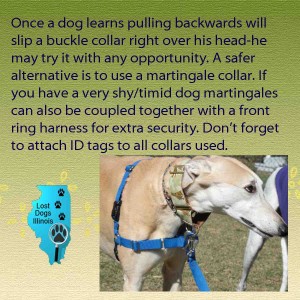
3. Use a martingale collar on every dog (see photo above). These are great for the shy dog that has learned to back out of a standard collar. Also, consider using a sensation harness along with a martingale collar (either by using two leads or clip the lead to both O rings) for those that are extremely high risk.

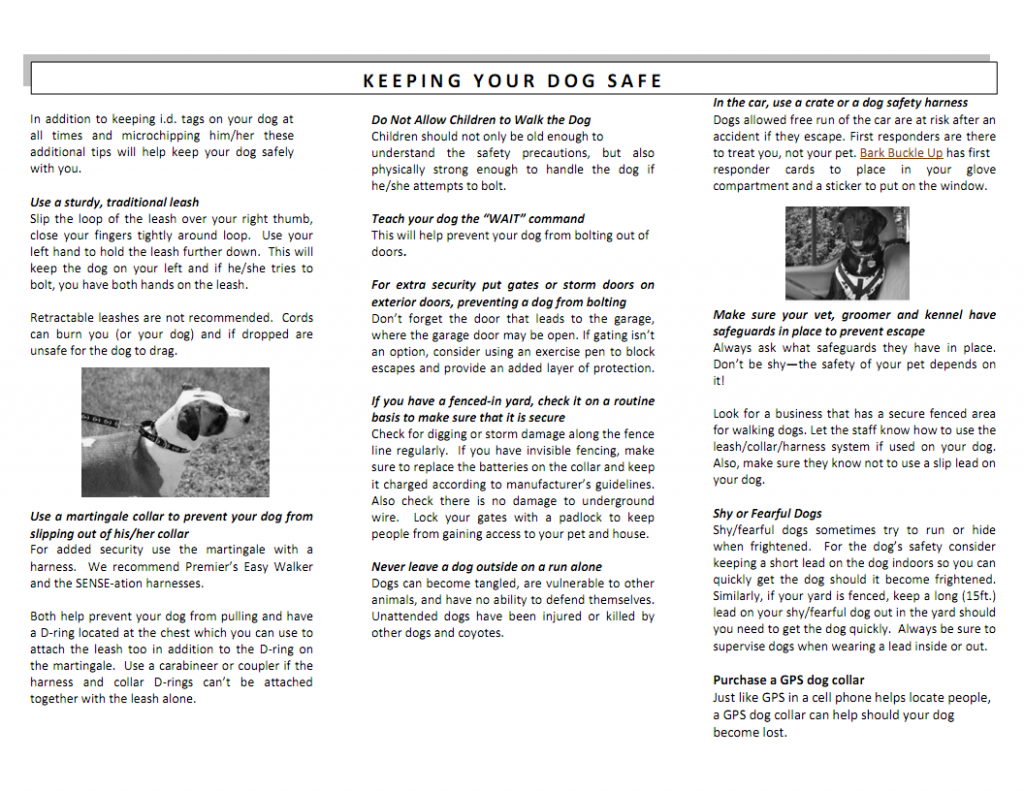
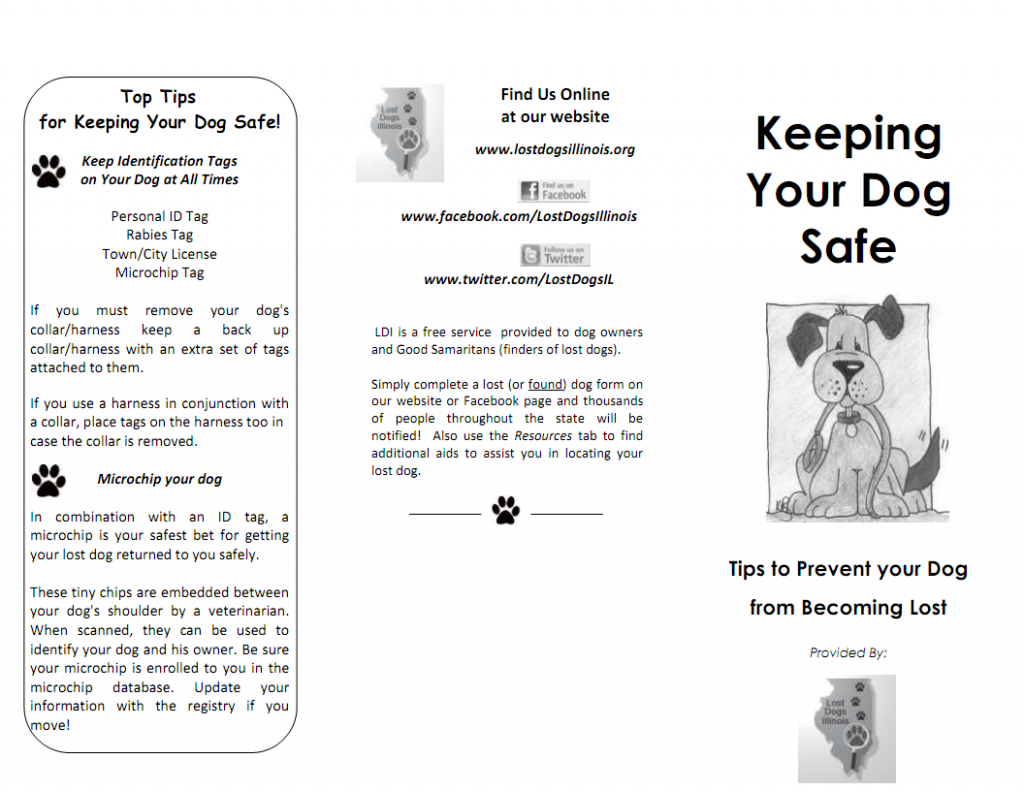
4. Educate your foster homes and new adopters on the challenges of high flight risk dogs. Put together a packet of information for them to include in their adoption paperwork. Here is a sample from Lost Dogs Illinois that you can use.

Read part 3 https://www.lostdogsillinois.org/harnessing-the-energy-part-3/

Previous article https://www.lostdogsillinois.org/harnessing-the-energy-part-1/


Very Few Dogs are Stolen. But if Yours is, Here are Some Suggestions

KONICA MINOLTA DIGITAL CAMERA

When a dog is missing, the first reaction is often panic. Panic leads to unclear thinking about what really happened. Many people are convinced that their dog has been stolen, before they objectively think through all of the scenarios.

Just last week we had a case where the dog was missing from a fenced yard. The owner assumed their dog was stolen but he had fallen into a window well and was recovered safely. Check everywhere first!

Next we need to clearly define the difference between a dog that is picked up and one that is stolen.  A picked up dog is one that was lost, or perceived to be lost and a Good Samaritan took the dog in,  to keep it out of harm’s way.  Stealing involves a person who commits a crime of intent by illegally entering your house, business, yard or vehicle and taking your dog.  There is a big difference because the motive is different.

If you have reconsidered and realized that your dog was picked up by a Good Samaritan – please read this article instead.

“Stolen” dogs make headlines which makes it appear that it happens more often than it does. But when the dog is recovered, and it wasn’t stolen; the outcome doesn’t get the same media attention. So the public only remembers that the dog was “stolen” when it may have simply been lost or picked up.

The media loves to over sensationalize the story of a stolen dog and pretty soon people’s minds are playing tricks on them – creating all sorts of bizarre scenarios that probably didn’t happen.  At Lost Dogs of Wisconsin/Lost Dogs Illinois we focus on “probability” vs. “possibility”. We never say never, but when we look at the results of our thousands of successful reunions, we see some pretty clear patterns.

In our experience  we have found that very few dogs are actually stolen. And, of those that are stolen, many of those have been taken by somebody that is known to the family.  If you think your dog has been stolen, consider these possible suspects first:

1. A disgruntled spouse, ex-boyfriend or ex-girlfriend, or other family member

2. A disgruntled employee, contractor or anyone you may owe money to

3. An unhappy neighbor who perhaps disagrees with how you care for your dog.

Immediately file a police report. If your dog has been stolen, you need to create a paper trail to help you. You also will need the police department on your side because you will need them to accompany you when you find out where your dog is. You will also want to make sure that the thief is prosecuted.

Regardless of whether you dog is simply lost, has been picked up by a Good Samaritan or has been stolen – the way to recover them is to generate sightings by getting the word out. The following action plan has been written to help you generate sightings if you have concluded that your dog has been stolen in an urban setting.

Action_Plan_for_Stolen_Dog_(3)_(1)

Note:  Any advice or suggestion made by Lost Dogs of Wisconsin/Lost Dogs Illinois is not paid-for professional advice and should be taken at owner’s discretion.

Harnessing the Energy – Part 1

“Finn, a shy lost dog, was successfully captured by a team of volunteers from NBRAN and other concerned area citizens.  This team has now gone on to help capture other lost dogs in the area.”.

There are more lost dogs now than there have ever been.  Pet ownership is up and we, as a nation,  are saving more dogs, with many more people choosing adoption as their option. This is a great thing but it comes with its challenges. For many people, this is their first experience owning a shy, rescued dog. These dogs are often high flight risks and can quickly escape through a door or wiggle out of an ill-fitting collar, harness or slip lead.

Searching for a shy lost dog is expensive and time-consuming. Most shelters and rescues are obliged to help search for a dog that has gone missing from a newly adopted home, a foster home, their transport or their facility. Here is a list of the potential costs associated with a lost dog search:

  • Printing flyers, possibly thousands of them
  • Printing and making intersection signs
  • Newspaper and radio advertising
  • Automated calling services
  • Trap rental or purchase
  • Gasoline
  • Lost wages
  • Shelter/rescue staff and volunteer time that go towards the search instead of their regular duties

When you take all of this into consideration it is very apparent that it is in the best interest of everyone to make sure your team of volunteers knows the most efficient and productive way to conduct a lost dog search.  Your rescue or shelter does have a team, don’t they? A well-trained team that can quickly mobilize when a dog goes missing will save your rescue time, money and possibly the dog’s life.

Since their inception, Lost Dogs Illinois and Lost Dogs of Wisconsin have helped reunited over 60,000 dogs. Most of these were found safely, some ended in heartbreak.   Many of these were from rescues, shelters, transports, or were in foster homes or newly adopted homes. We would like to share with you what we have learned in this next series of articles.

Lindsey, former puppy mill dog, escaped from a fiery crash. Family was injured and from out of town. Midwest BREW’s Find Snoopy team trapped Lindsey.

Part  2- https://www.lostdogsillinois.org/harnessing-the-energy-part-2/

A Picture Is Worth A Thousand Words…….

Earlier this week, a lost dog became stranded on the Kennedy Expressway. NBC News Video  showed concerned citizens and officials trying to capture the dog. It was very heart-wrenching to watch an “owned” female dog that was in pain and scared to death trying to elude her captors, people who took action that was in the dog’s best interest.

Lucky for her, she had a team of guardian angels:

The group of men who captured her on the Expressway.

The director of the American Animal Rescue Society posted the video on the organization’s Facebook page asking for a foster home willing to take care of the dog despite her injury.

Ev, a fan of the American Animal Rescue Society and LDI, posted the video on LDI’s Facebook page asking, “Does this dog look familiar?”

Jackie, a LDI volunteer, jumped into matching mode, found a Craigslist lost dog ad with the dog’s picture and then found the “found” dog listing on Petharbor, the website where Chicago Animal Control posts found dogs.  Jackie was able to determine that all three pictures were very similar so she contacted the owner immediately.

It was like the planets were aligned on that fateful day. Within 24 hours, Lassie was claimed by her owners and was taken to a veterinarian.

So when someone says, “Oh, you should never post a picture of the dog you found,” tell him or her about Lassie because her picture was worth even more than a thousand words…much, much more.

UPDATE:  Dr. Hammer of Norwood Park Animal Hospital is donating his services  for Lassie’s medical needs.


Are There More Lost Dogs Now?

Puppy mill dogs and rescued dogs are often shy, undersocialized and wary of strangers. Photo credit: Frank Schemberger

People are always amazed at how many lost dogs there are posted on our Facebook page. We commonly get the question “Are there more lost dogs now? Why?”

Here is our answer:  YES! There are more lost dogs now. As a nation we are saving more dogs than ever, with many more people choosing adoption as their option. This is a great thing but it comes with it’s challenges. For many people this is their first experience owning a shy, rescued dog. These dogs are often high flight risks and can quickly escape through a door or wiggle out of an ill-fitting collar, harness or slip lead.

These high flight risk,  shy puppy mill and rescued dogs have many vulnerable moments while they are making their way through the re-homing system. Dogs are lost from transports, foster homes and  animal shelters or can be lost from their newly-adoptive homes.

There are also more under-socialized pet store dogs than before. Pet store puppies are often taken from their mothers and litter mates far too early, to make it to the pet store market while they are still irresistibly cute and cuddly. But this deprives the puppies of an important socialization period and can result in a shy, fearful personality.

Shy dogs are also being lost from shelters, vet clinics, groomers, pet sitters and kennels in record numbers. Education is the key! Educating people on how to prevent escapes and how to catch a shy, lost dog (don’t chase or call him) will help more of these dogs get home safely. Thank you for spreading the word and helping us!


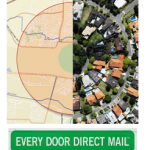
Every Door Direct Mail® Can Help Deliver Your Flyers

The number one way that lost dogs are successfully recovered is through the use of flyers and signs that alert the neighborhood and surrounding areas that your dog is missing.

Printing and delivering flyers can be time-consuming and costly. Also, it is illegal for the general public to put flyers into US mailboxes. The USPS has a service to help. How does it work? Use the EDDM® Online Tool to search for neighborhoods you want to reach, and a Postal Service Letter Carrier takes your printed flyers to every home while delivering the day’s mail. Your lost dog flyer gets directly into the hands of the homeowner.  EDDM does not require a postage permit.

Go to USPS EDDM® Online or ask your local postmaster for details.  Some printing requirements apply.

Our tips, ideas and articles are based on information gathered from over thousands of successful lost dog recoveries. Any advice or suggestions made by Lost Dogs of Wisconsin/Lost Dogs Illinois is not paid-for professional advice and should be taken at owner’s discretion.

Assumptions usually lead us down the wrong path

This is Annabelle, 24 hours after being lost


This is Annabelle


Imagine this…

You’re driving down the road on a rainy day when you see a dog just off the shoulder.  Drivers always go well above the speed limit on this road, just like you were doing before you stopped to try to corral the dog for its own safety.  As you load the dog into your back seat, you notice how dirty and thin the animal is.  You also take note of the scratches that are like pock marks along the Labrador’s muzzle.  You begin to wonder what the dog’s owners could have done to their pet.  How could anyone treat a living thing like this?  Well, no more, you decide.  You’re going to take the dog home with you so the animal can enjoy an abuse-free life.  First, the dog will get a bath.  Then, off to the vet to have those scratches looked at…

Now, imagine this…

Little Susie’s father pulls into the family’s driveway on a stormy night.  Excited to see her father after his week-long business trip, the five-year-old runs out of the house to greet her father…and leaves the front door wide open, a habit her parents have worked long and hard to break.  Seconds later, a loud clap of thunder terrifies the dog Susie’s parents had gotten her on her third birthday, a chocolate Labrador named, Hershey.  In his angst, Hershey bolts out of the open door and, without even turning to look at Susie or her father, disappears into the night.  Susie’s parents take the next two weeks off from work to look for their beloved pet.  Susie’s father reminds his daughter that Hershey had an extra 20 pounds on him so he won’t be hungry again until he returns home.  The staff members from the daycare where Hershey played every weekday join the search for him, but…

Finally, realize this…

Nine times out of ten, a dog that is found along the side of a road, in a schoolyard, by a gas station, or somewhere else is not just a lost dog, the animal is a lost pet.  Just because a dog appears underfed, filthy, and unkempt doesn’t mean he was or is not loved by his owners.  When a dog is lost, his appearance in no way, shape, or form is indicative of the lifestyle he enjoyed when he was in his home environment.  His appearance only indicates that the dog is struggling on its own without the care of his family.

Consider what would happen if you suddenly got separated from your tour group in a foreign country.  Today was your group’s first day abroad and you can barely remember what country you’re in.  You don’t speak the language and you can’t even imagine where a safe place for you to go would be.  Similar to a lost dog, you would get anxious and maybe make some irrational, panicked decisions.  If you didn’t reunite with your group within 24 hours, you might start to get hungry and, well, a bit stinky, too.

The point is, you have no idea how a dog lived before he became lost.  You might assume his owners neglected him at best, abused him at worst, based on the condition he was in when you found him.  But, 90 percent of the time, your assumptions would be 100 percent wrong.

The best, the responsible thing to do when you find a lost dog is to contact your local animal control or stray holding facility.  Let the folks there know you have the dog and provide them with a picture so they can begin circulating the photo.  Let them know you’re willing to foster the dog until his owners are found or that you can drop him off at the ACO/stray holding facility.  In short, tell them you’re willing to do whatever you can to help the dog be returned to his family.

Remember, nine out of ten people do the right things for their pets.  The right thing to do when you find a lost dog is contact the animal control or stray holding facility and try to get the dog back to its home.  Isn’t that what you would hope someone would do if your dog was lost, after all?  How would you feel if, on the other hand, a stranger refused to take the steps necessary to get your dog back to you because the person ASSUMED you were an irresponsible owner?


Your Friendly Dog Has Gone Missing! What Now? – Part 1 of a Series

Rollie, your  friendly dog is missing. He was in the fenced backyard sniffing around and enjoying himself while you just stepped inside for a minute to get a cup of coffee. The phone rang and you were longer than you meant to be. When you came back out he was nowhere to be seen. Then you saw it, the side gate was open. It must have blown open in the wind last night! Rollie must have used the opportunity to check out the neighborhood.

Rollie fits the profile of an opportunistic dog. You may never know what happened in those few minutes when Rollie escaped, but it doesn’t really matter. What matters most is what you do next. Quick action will help you recover Rollie safely and the following series of articles is designed to help you find a friendly dog that took an opportunity to go for an adventure.

First things first, you need to check out our 5 Things To Do If You Have Lost Your Dog and get those steps underway. Keep food, water, his bed and familiar scented articles at the spot where he went missing from for the entire duration of his adventure. Many of these dogs do return on their own. Especially if they aren’t being chased and driven out of the area.

Contact all of the correct authorities – police, shelters, animal control facilities and then get busy printing your flyers and signs.  You need to go door to door with your flyers as soon as possible. Somebody, somewhere, has seen something. You might talk to 99 people that haven’t seen anything. But you are looking for the one person that has seen something. Has somebody seen your dog in their yard or did they see a vehicle stop and pick your dog up?

Three things will generally happen to the opportunistic dog:

  1. He will get picked up by a Good Samaritan who doesn’t want to see him hit by a car. Depending on the Good Samaritan’s actions: he may be reunited; taken to a shelter, animal control facility or rescue;  rehomed or kept by the finder.
  2. He will wander far outside  the owner’s original search area and start to live on his own (survival mode); eventually ending up at a farm, business or house where somebody either recognizes and reunites him; takes him to an animal control facility, shelter or rescue; rehomes him or keeps him.
  3. He will be picked up by the police or animal control and taken to a facility. Keep in mind that he may end up far outside the jurisdiction area of the local shelter and may be in the next county or the next state in a very short time.

Okay, now that we know the possible outcomes, let’s go through them step by step to try to maximize your chances of finding Rollie.

Continue on to part 2

Our tips, ideas and articles are based on information gathered from over thousands of  successful lost dog recoveries. Any advice or suggestions made by Lost Dogs of Wisconsin/Lost Dogs Illinois is not paid-for professional advice and should be taken at owner’s discretion.


Did Your Lost Dog Get Picked Up By a Good Samaritan? Part 2 of a Series

Immediately put a sign in front of your house to alert neighbors and passersby that your dog is missing.

The first thing we need to do is clearly define the difference between a dog that is “picked up” and one that is stolen.  A picked up dog is one that was lost or perceived to be lost and a Good Samaritan took the dog to keep it out of harm’s way. Very few dogs are actually stolen. Stealing involves a person who commits a crime of  intent by illegally entering your house, yard or vehicle and taking your dog. There is a big difference because the motive is different.  We will cover the stolen dogs in a future article. But now let’s get back to the dog that was picked up by a well-meaning passerby.

The type of dog most likely to get picked up is the small, friendly dog lost in an urban or suburban area. They may get picked up within minutes of going missing, especially if they are seen near a busy road.

Larger, friendly dogs may get picked up but are more likely to have traveled a farther distance before they do. Many people are wary of larger dogs, or they don’t have a vehicle large enough to put them in, or they are transporting children or their own pets. It is simply easier to pick up a small dog than a large one.

First and foremost, you must understand that the Good Samaritan meant well. But now the guessing game of understanding human behavior begins.  Here is a little quiz.  Let’s see if you can tell which of these scenarios will most often end up in a happy reunion.

The finder thinks:

  1. Somebody has lost their dog and I must try to find his owner.
  2. Somebody has dumped this dog or lost him out of negligence and I must rescue him. They don’t deserve him back and I will keep him or give him to Aunt Mary who really needs a nice little dog for company.
  3. I’m in a hurry and I can’t keep this dog  so I will take it to a shelter (or vet clinic) that is in the town where I work.
  4.  I can’t keep this dog but I don’t want to take it to the local shelter because they don’t have a good reputation, so I will take it to a better shelter or rescue where the dog can be adopted to a new home.
  5. I can’t keep this dog so I will research which is the correct shelter, stray holding facility or animal control facility that services this area and take him there.
  6. I will wait and see if the owners post signs and flyers and then I might give him back. If I don’t see any signs or flyers, they mustn’t really want him so I will keep him or give him away.
  7. I will wait to see if the owners offer a reward and then I will turn him over.

If you guessed numbers 1 and 5  you are correct. Finders who proactively look for owners, and dogs taken to the animal control facility, stray holding facility or shelter that serves the area where the dog was lost are the dogs that are most likely to be reunited with their owners. Educating the public about this is a large part of what we do.

But as you can see from the other options, there is a lot of human emotion in play. We see a lot of the “wait and see” method. The lesson we have learned  is that it doesn’t matter which scenario played out. The key to getting your dog home is to generate sightings by using flyers and signs. You must “convince” the finder that you are desperately looking for your dog. If the finder has decided to keep your dog you will either make them feel guilty by the amazing search you are conducting or a neighbor will “rat them out” by noticing that they have a new dog that looks just like the one on the flyer.

Put a sign in your yard as soon as possible. If the Good Samaritan was merely driving by and doesn’t live in the area, he may drive by again, checking for signs.  Do the legwork of going door to door with your flyers. Talk to everyone you see.

Use intersection signs at strategic locations throughout the area. They are an invaluable tool to alert the neighborhood that your dog is missing.

File a lost dog report and leave a flyer with your local police station and your animal control facility. Do the same for every vet clinic, animal shelter and rescue in a 50 mile radius. (You may need to expand this) Create a paper trail showing that you are actively searching for your dog. This may be invaluable if there is a question about ownership.

Use traditional and social media and Craigslist to get the word out. Put an ad in your local newspaper and call your local radio station. Remember that not everybody has a computer.

Look at the map. Where does the road go that you suspect that your dog was picked up on? Think about the traffic patterns, the commuters and the places of employment nearby. Get flyers out to those towns and places.  You will find many other suggestions for generating sightings on our website.  Print hundreds of flyers and use them. They don’t do any good sitting in a stack on the kitchen table.

Quickly spreading the word is the number one way that a small friendly lost dog will be reunited. Get going now!

Continue onto part 3

Our tips, ideas and articles are based on information gathered from over thousands of  successful lost dog recoveries. Any advice or suggestions made by Lost Dogs of Wisconsin/Lost Dogs Illinois is not paid-for professional advice and should be taken at owner’s discretion.

The Happy Wanderer – Part 3 of a Series


Do you remember that old song from Girl Scout camp, the Happy Wanderer? “I love to go a-wandering, Along the mountain track, And as I go, I love to sing, My knapsack on my back.”

This is often the scenario played out by the friendly, opportunistic large dog, or a friendly small dog in an unpopulated area. They took the opportunity to go for a wander, smelling new smells, maybe chasing chipmunks and rabbits; but they never gave a moment’s notice that they forgot to bring the map.

As we discussed in Part 2, the chance that the small friendly dog got picked up quite early in his adventure is very high.

But today, we are going to talk about the larger friendly dog that was having a good time but ended up a long ways from home. (In particular, think hounds, labs, huskies, spaniels, setters, pointers, German shepherds and other working and sporting breeds). Whereas, shy lost dogs will often stay within a five mile radius of where they went missing, friendly lost dogs may travel in a linear fashion, zig zagging across the countryside.

These dogs may find their way back home IF you give them a helping hand by leaving food, their bed, and familiar scented articles out for them at the place they went missing from. Do this the entire time they are gone. Refresh the food daily with new smelly canned dog or cat food or some leftovers you are having. Dogs return by scent, not by sight or sound. So that same nose that led him away, may lead him back.

But you don’t want to rely on that, because there are far too many other scenarios that could have occurred.

  1.  He could have gotten chased by people who thought he was “just a stray” and  didn’t want him in their yard or farmyard.
  2. He may be seen but be assumed to be a wandering farm dog and nobody calls in the sightings.
  3. He could have crossed a river or a bridge and can’t figure out his way back.
  4. He could have been picked up by a Good Samaritan, animal control or the police across a state, county or jurisdiction line and have ended up in a shelter, animal control facility or stray holding facility many, many miles away.
  5. He may have found a food source or some friendly doggy companions at a farm and decided to stay awhile. In our experience, most farmers won’t proactively look for an owner, but will let them hang out as long as they aren’t causing trouble or chasing livestock.
  6. He may do this numerous times, staying somewhere for a few days, then moving on again.
  7. He will eventually end up at a farm, business, or backyard or driveway of somebody who decides to either proactively look for the owner, turn him in, or keep or rehome him.

If they decide to proactively look for an owner or take him to the correct stray holding facility for the area, great! Except that by this time, the owner may have given up or they may not be looking in the right spot. Compound that with the problem that many of these larger friendly breeds look alike (think black lab or yellow lab) and it becomes even tougher to find your dog.

What can you do?

Do everything listed on our Five Things to Do If You Have Lost Your Dog flyer, our Action Plan and then include the following:

  1. Expand your flyering area quickly. Start with a 50 mile radius and then expand to 100 miles. Enlist friends and family to help you. You may want to use an automated calling service or the USPS mailing service called “Every Door Direct Mail” to help you. Check out our Generating Sightings pdf on this website for more ideas. When you get a sighting – go in and heavily re-flyer that area.
  2. Place a yard sign in your own yard.
  3. Place ads in your local newspaper and surrounding newspapers. Many small newspapers are owned by larger companies that can target many communities with one ad. Place an ad with the local radio station also.
  4. Assign a couple of Facebook and tech savvy friends to post on as many different social media sites as possible. Make sure you include a picture and contact information! Many neighborhoods, on line newspapers, vet clinics, pet supply stores, restaurants and bars have Facebook pages. It is an easy and free way to spread the word.
  5. Use intersection signs at strategic locations to catch the eye of the highest number of motorists.
  6. Check Google satellite photos for paths he could be traveling on – railroad tracks, jogging and hiking trails, old logging roads, etc.
  7. Do not limit your thinking with geographical boundaries – “he wouldn’t have crossed that river, or that busy freeway.”  Chances are he did and he will.
  8. If you have a familiar looking dog (lab, golden retriever, etc), don’t be afraid to disclose specific details on your flyer. What color collar was he wearing? Distinguishing birthmarks, size, etc. You will need the help of the community and animal shelters to identify him.
  9. Check out every possible lead even if it seems impossibly far away. Never underestimate the distance your dog can travel. Don’t be surprised if your dog doesn’t recognize you at first or doesn’t perform specific behaviors. The stress of being on his own and/or a shelter can alter behavior.
  10. The longer your dog is missing and the more often he is chased,  the more likely it is that he will go into “survival” mode. Please refer to our series of articles on capturing a shy, elusive dog.

We can tell you numerous stories of dogs that have gone hundreds of miles and been recovered. Don’t give up! Your dog is out there relying on you to find him and bring him home.

Our tips, ideas and articles are based on information gathered from over thousands of successful lost dog recoveries. Any advice or suggestions made by Lost Dogs of Wisconsin/Lost Dogs Illinois is not paid-for professional advice and should be taken at owner’s discretion.