Tag Archives: found dogs

Tips for Found Dogs Taken in by Rescues

One of our goals is to work with the animal control facilities and shelters to untangle the mess that is currently the lost pet recovery system in our nation. The main function of tax-payer funded animal control is to hold lost pets until owners reclaim them, thereby protecting the public from traffic accidents, dog bites, scratches, etc. caused by loose pets.

Our organizations advise people that have found a dog to contact their official local stray holding facility (whether it be the shelter, a vet clinic or kennel, the town office or police department). Some stray-holding facilities will allow the finder to “foster” the dog until an owner is found; but many want the dog brought to their facility. And that is okay, as long as they are doing everything possible to proactively reunite the dog with their family. Unfortunately, there are still stray holding facilities that do not proactively search for an owner and the dog may be at risk of being put down at the end of the stray hold period.  In these municipalities it is common for a Good Samaritan (the person who has found a loose dog) to want to ensure the best possible outcome for the dog. The higher the “kill rate” of a shelter, the less likely it is that the dog will be taken there.  Instead of taking the dog to the correct animal control facility for the location, the Good Samaritan may surrender the dog to a rescue.  We understand this and appreciate the Good Samaritan’s compassion for the dog.  Unfortunately, many of these dogs are never reunited with their owners, and instead are rehomed to new adopters who may not realize that they have adopted someone else’s dog.

Rescues have the responsibility to make sure that the dogs they are rehoming are truly homeless.  If they aren’t, they are simply selling someone else’s property, a criminal offense in all fifty states.

We have compiled this checklist to help rescues find the owner of a missing dog. This does not exempt the rescue from liability if an owner comes forward after the dog is rehomed. Civil cases brought forth by an owner against ar rescue or a new adopter are being won in court.

  1. Scan the dog for a microchip several times with different scanners using Best Microchip Scanning Procedures.  If a microchip is found but appears to be a “dead end” fill out a form for our free service  by clicking here.  This can be used even if the microchip is unregistered.  The owners of many dogs with unregistered microchips have been found through this service.
  2. Fill out a found dog report with our partner, Pet FBI with several clear photos of the dog from different angles.  Keep the listing up to date.
  3. Print out the free flyers provided by Pet FBI and distribute them door to door in the area where the dog was found.
  4. File a found dog report with the correct stray holding facility for where the dog was found, as well as those in surrounding communities and counties. It is not uncommon for a dog to travel a long distance when they are lost or to be taken to a neighboring county shelter by a Good Samaritan.
  5. File a found dog report with all police departments, sheriff’s offices, town and county offices and other local authorities in the immediate area and neighboring communities. This is often the first place that owners will contact.
  6. Contact all local vet clinics, pet boarding facilities, groomers and pet supply stores to ask if they have had any reports of lost dogs.  Supply them with a found dog flyer to post.
  7. Scour the lost dog listings in the area including Craigslist, Nextdoor, Everyblock or other neighborhood sites, Facebook groups, local newspapers and radio stations and all lost and found pet internet sites including of course, our partner, Pet FBI – the nation’s largest non-profit database for lost and found pets.
  8. Consider that the dog could have been lost a long time and do not let appearance factors like weight, overgrown toenails, matted coat, etc. deter your search for an owner. Also consider that the last person who had the dog may not be the rightful owner.  You owe it to the dog to find the rightful owner and find out the truth.
  9. Consider that the owner may not speak English or may not have a cell phone or the internet. Do not assume that because no one has responded to your social media posts, that the dog has been abandoned. Many people are not on social media or do not have access to the internet.   Expand your search for an owner to include other languages.  Use more traditional methods of getting the word out, such as door to door flyering and signs.

These steps will ensure you have done your due diligence to find the legal owner of the pet and would minimize any possible future legal action if an owner comes forward later.  However, the only way you can truly indemnify yourself as a rescue, is to only pull dogs from shelters after they have completed their legal stray hold time.

We understand that this places an additional burden on rescues but the positive implications are huge. Rescues who reunite a dog with their rightful owners free up an adoptive home for a dog who truly needs it. Valuable money and resources can be saved to help truly homeless dogs.    Happy reunion stories are widely shared and can elevate the rescue’s reputation in the community.  This increased goodwill (and potential donations) enables the rescue to save more lives.   Let’s all work together to help more lost dogs get home!

1/21/2021
What To Do If You Find A “Stray” Dog

Finding a lost dog can be stressful, for both you and the dog. Taking the right steps can greatly increase the chances of reuniting them with their family.

First Steps

  • Check for identification. Look for a collar with a license or ID tag and contact the owner immediately if information is available. If there is a tag and you can’t get in contact with the owner for any reason, our volunteer Microchip Hunters’ Team may be able to help.  Submit the tag information here:  https://form.jotform.com/90818285559976
  • Have the dog scanned for a microchip as soon as possible. Any veterinary clinic, police department, or animal control agency can scan for a microchip at no charge.
  • Record the microchip number. If a microchip is found, write down the number or take a photo of the scanner display. Having the microchip number available is important if additional research is needed.
  • If the microchip leads to a dead end, contact our Microchip Hunters team. If you can’t find the owner information, the registered contact information is outdated or the owner cannot be located, our volunteer Microchip Hunters may be able to help research the chip. Submit the microchip number here: https://form.jotform.com/90818285559976
  • Ask nearby neighbors. The dog may have wandered only a short distance from home.
  • Report the found dog. Contact your local animal control agency or police department (non-emergency number) to report that you have found a dog. If you are unable to safely care for the dog while searching for the owner, ask your local animal control agency about your options.

Spread the Word

  • Create a Found Dog report on PetFBI.org.
  • Register the found dog with 24Petconnect. This database is used by many shelters to help reunite lost pets with their families.
  • Post the dog on local social media, including Facebook, Nextdoor, and the Neighbors by Ring app.
  • Check PetFBI.org and Lost Dogs Illinois to see if anyone has already reported the dog missing.
  • Post clear FOUND DOG flyers in the neighborhood where the dog was found and at local veterinary clinics, pet supply stores, community bulletin boards, and other pet-related and nearby businesses.
  • Place a large, easy-to-read sign near the location where the dog was found to alert nearby residents.

Before Returning the Dog

If someone contacts you claiming to be the owner:

  • Ask them to describe the dog before you provide details. They should be able to identify unique markings, behaviors, collar, or other distinguishing characteristics.
  • Request proof of ownership, such as:
    • Veterinary records
    • Rabies certificate or license
    • Adoption or registration paperwork
    • Photos of the dog with family members

When meeting to return the dog, choose a safe public location, such as a veterinary clinic, police station parking lot, or another well-populated area during daylight hours. Let a friend or family member know where you will be or bring someone with you.

A Note About the Dog’s Behavior

Don’t be concerned if the dog doesn’t immediately recognize or run to its owner. Dogs that have been missing for an extended period may have entered survival mode, a fear-driven, instinctive state where their normal behaviors and responses are temporarily suppressed. It can take time for them to relax, process familiar scents and voices, and recognize their family.

Important Reminder

It is illegal to place flyers inside, on, or attached to U.S. mailboxes without authorization. Instead, distribute flyers door-to-door, post them on community bulletin boards (where permitted), or hand them directly to residents.

“The Chicago Way” Helps Kyra Get Home


Kyra 2 11-30-15

Kyra

Long-time Chicago residents are familiar with “The Chicago Way”:  it’s often not what you know, but who you know, that gets things done in this city.

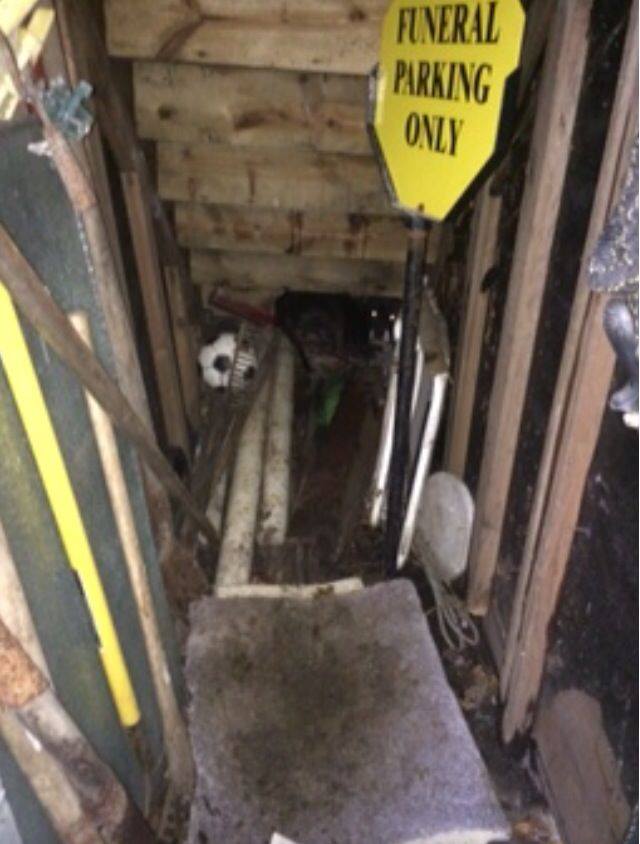
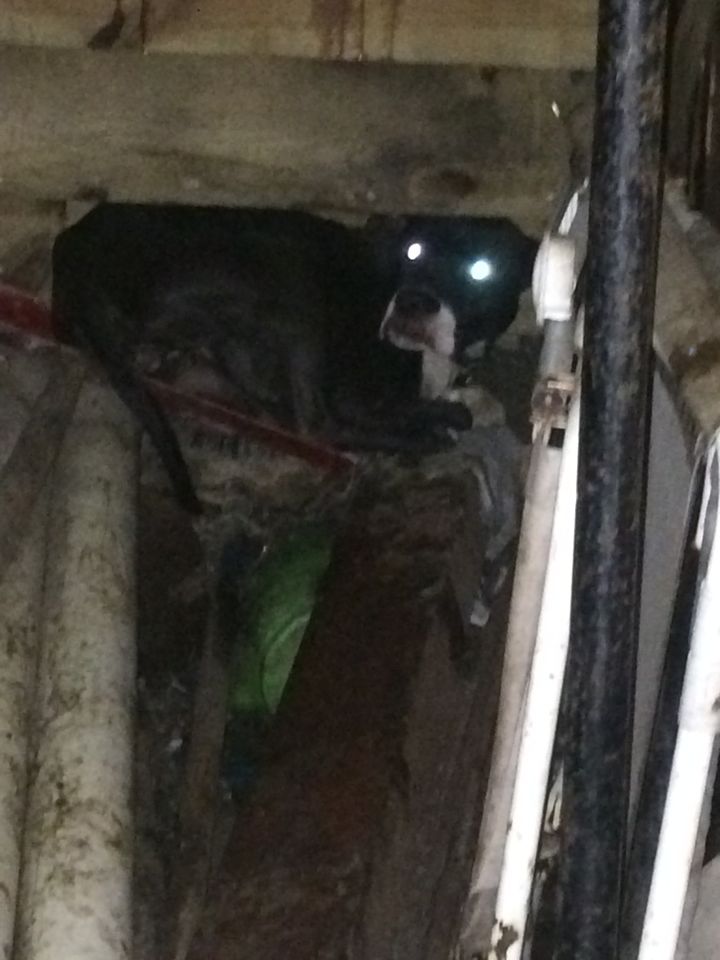
So when Andy Csapo opened the tool shed in back of his family’s funeral home on Chicago’s Northwest on Nov. 20 and saw two eyes glowing in the back of the shed, the first thing he did was tell his wife, Joyce.

“The shed is just an enclosed outdoor stairwell, and the door has a missing slat on the bottom, so it must have crawled through that,” Andy said.

“I could make out a large animal with a dark coat trying to hide under the lowest stair. I knew it was some kind of dog; too big to be a coyote or raccoon.”

Can you find Kyra?

Can you find Kyra?

There is Kyra!

There is Kyra!

The Csapos did not want to call Chicago’s Animal Control for help, because they didn’t want the dog taken to the city pound. Joyce called her daughter, Joy, and asked Joy to call a friend who does animal rescue transports for help.

The transporter, Lydia Rypcinski had never done an actual rescue. However, she knew Susan Taney, founder of Lost Dogs Illinois, and called Susan for advice.

Susan referred Lydia to Katie Campbell, an experienced dog rescuer who lives on Chicago’s South Side.

Katie suggested that Andy cover the opening in the door, provide the dog with blankets, food and water, and make sure it was secure until she could get to the funeral home the next day. With Chicago’s biggest November snowstorm in 127 years approaching that night, Katie’s concern was that the dog stay in one place, protected from the elements.

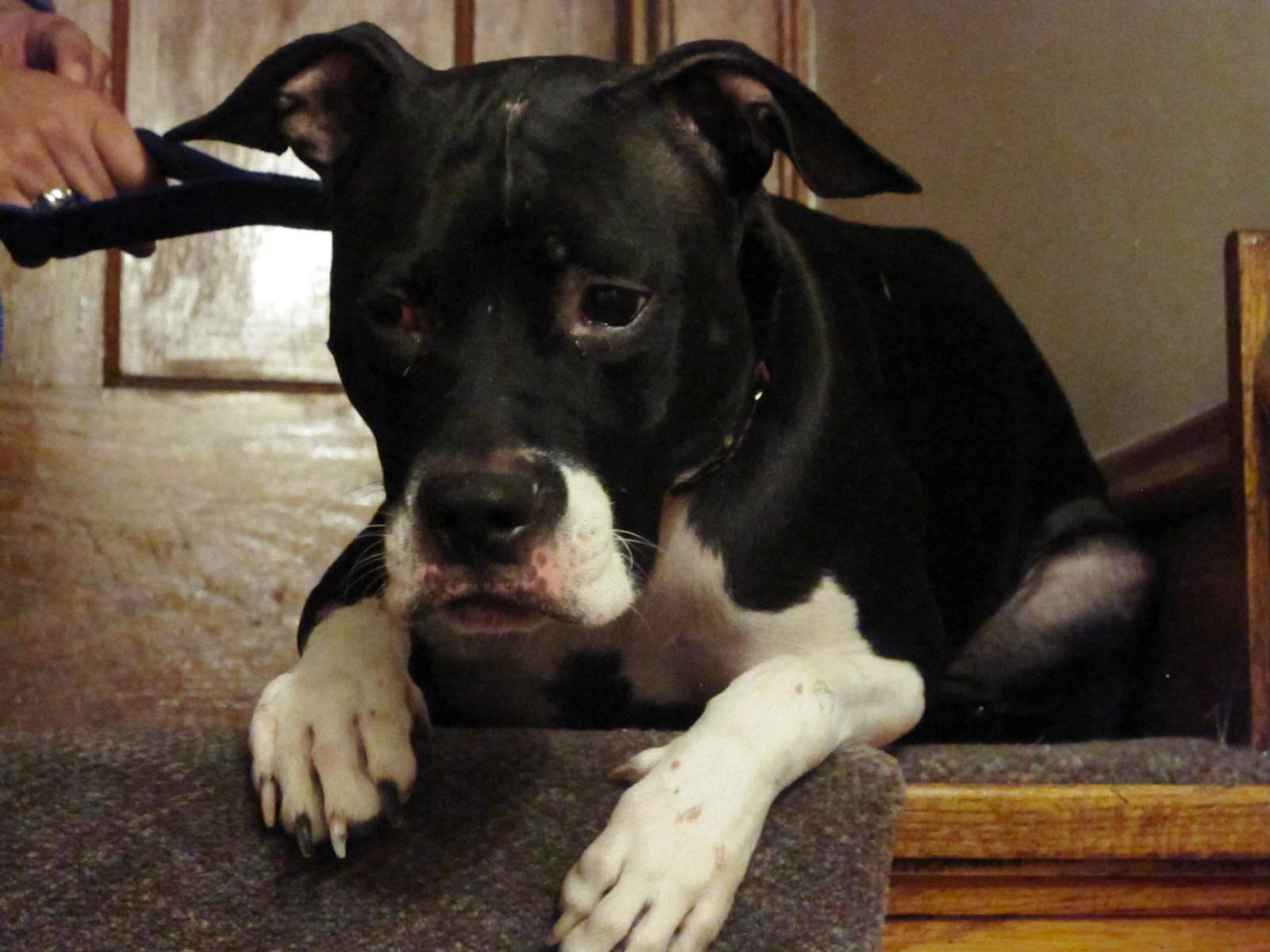
The next afternoon, Katie arrived with hot dogs and her “snappy snare” and was able to secure and bring the dog out of the shed. The dog had a collar and nametag – “Kyra” – with a phone number on the back.

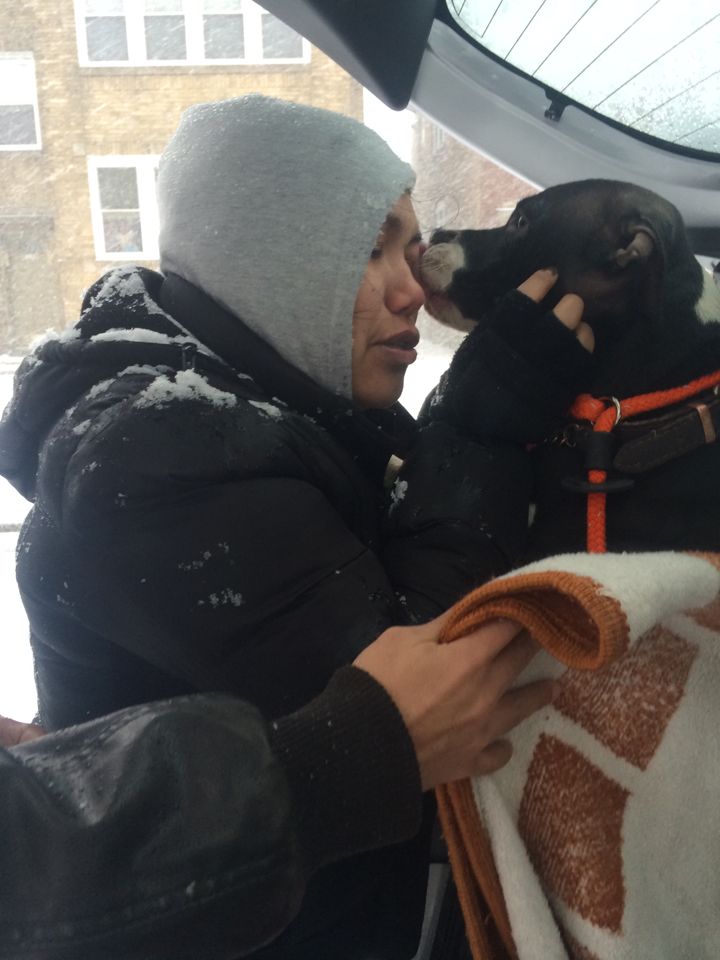
Kyra, a handsome 3-year-old black-and-white pit bull, was bundled into blankets and lifted into Lydia’s car while Katie called the number on the tag.

“It’s their dog!” she shouted as she got off the phone. Kyra’s family had posted the dog’s picture on Lost Dogs Illinois eight days earlier, after Kyra escaped from the back yard of their house two miles north of Meiszner Funeral Home. Katie was able reference the posting to verify that the dog was indeed theirs.

Kyra’s owners, the Ortiz family, were ecstatic to welcome Kyra home.

“The kids were jumping up and down and their other dog knocked [Kyra] right over when I brought her inside,” Katie said. “You could see her family really loves her.”

“I thought I would never see her again,” Sandra Ortiz said. “My family and friends told me to file a missing dog report on Lost Dogs Illinois. Several people called who thought they had found my dog but hadn’t, and I was starting to lose hope. I have three kids. My youngest was asking if Kyra was not going to live with us anymore. I didn’t know what to say.

“When Katie called, we were in tears.”

Welcome Home Kyra!

Welcome Home Kyra!

A trip to the vet revealed that Kyra had dropped from 57 to 33 pounds, that her sugar levels were high, and that she had cold burn rashes on her paws but otherwise was in good health. She was microchipped right away, and the faulty latch on the back gate was fixed to pre-empt future escapes.

A week later, Kyra had regained much of the weight and was happily romping with the Ortiz children and their other dog, a Shih Tzu named Bear.

“Bear was really excited to see her again, he had been getting depressed without her,” Sandra said.

“We’re so grateful to have her back,” Sandra added. “Thanks to everyone who helped bring Kyra home.”

The Chicago Way and Lost Dogs Illinois.  That’s a winning ticket in The City That Works.

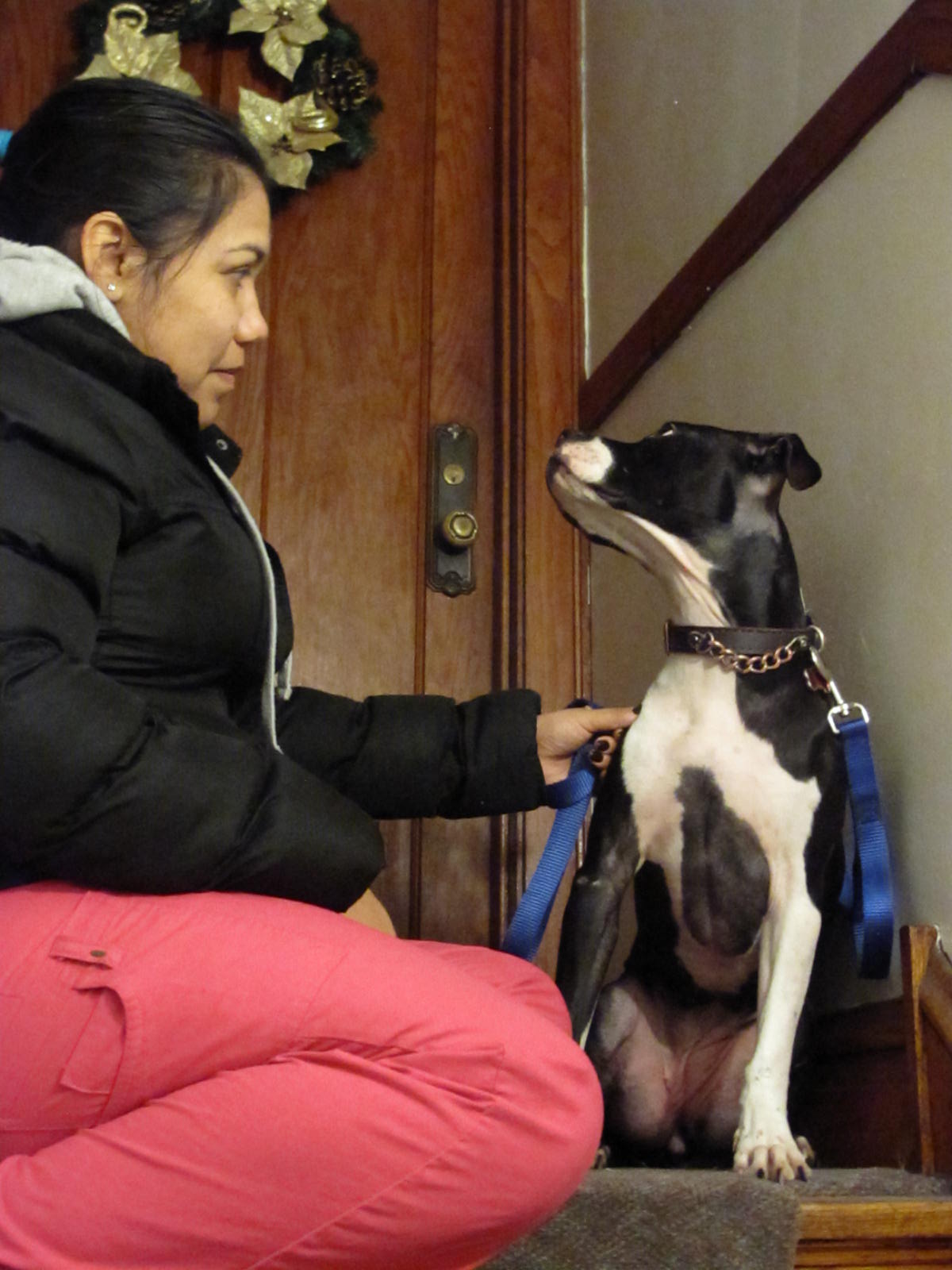
Kyra and Sandra Ortiz BEST 11-30-15

Kyra and Sandra – one week later!

Thank you Lydia Rypcinski for sharing Kyra’s story!

Animal Welfare League (Chicago) Sends Mixed Message on Their Policy about Found Dogs

If you have read our blog To Hold or Not To Hold, you will know that we are trying to find out if there is an Illinois law that states that once a stray holding facility scans a dog for a microchip it is required to hold the dog; even though the finder will provide safe shelter for the dog until the owners are found.

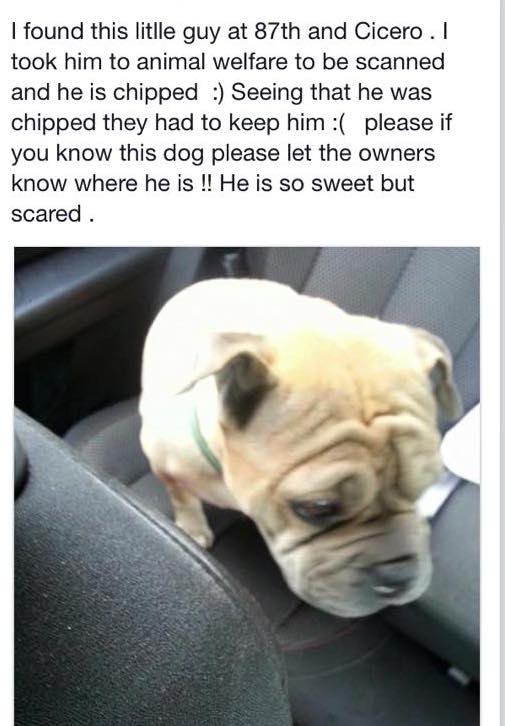
Animal Welfare League is sending out mixed messages on their policy. Below is the screenshot from a finder who took a found dog to Animal Welfare League to be scanned for a microchip and then had to relinquish the dog.

11208677_10206574599514859_1445942067_n

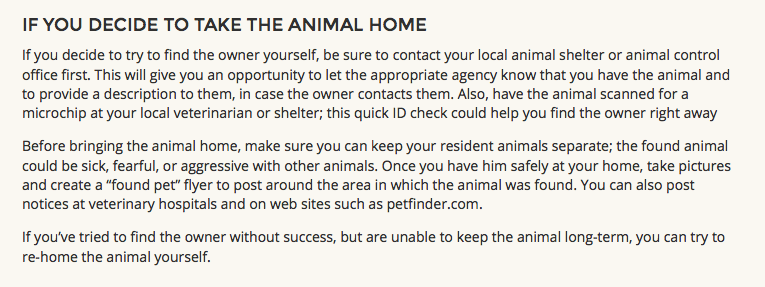
Yet, on the Animal Welfare League website (see below), they provide helpful information and guidelines for if you decide to keep the dog in your home until you find the owners.

This mixed message is confusing to the public, the owners and the finders. In order to facilitate more successful reunions between lost pets and people, we need the stray holding facilities to provide a clear, consistent message about their policies and practices.