According to the U.S. Census the average American will move 12 times in their life. Moving is stressful for both two and four legged family members. Your dog’s health and behavior can be off during and after the move. Below are tips for moving with your dog to help alleviate some of the stress and keep your dog safe.
Ensure your dog is wearing a properly fitted collar with current information on the ID tag.
Contact your dog’s microchip company to update your contact information.
During the move (both from old residence and new residence), confine your dog in one room with familiar bedding/toys. If your dog is crate trained, use the crate. Close the door and place a large sign stating, “Do Not Enter”. If it is not possible to confine your dog to one room, then considering boarding him/her during the move.
Keep your dog’s current vaccination records as well as a list of numbers for your local animal control, non-emergency police line and area vet clinics handy. Keep a current photo of your pets either printed or handy on your phone or tablet.
If you are driving cross country for your move, be mindful of your dog darting out of car doors at gas stations, rest stops, hotels, etc. Make sure your dog is attached to the leash before you open the door and you have a firm grip on the leash.
Once moved:
For at least the first few days place baby gates in front of all exterior doors even to the door leading to the garage.
If your new home has a fenced yard, perform a safety check; look for holes both in and under the fence, loose boards, broken gate latches, etc. Continue to be diligent – watch your dog’s behavior for the next few weeks in the fenced yard, he/she could find the weak link to escape out of the fenced yard.
Familiarize yourself with your new community by getting to know where your shelters, animal control facilities, vet clinics, police departments and town offices are. You will want to have this information handy in case your dog goes missing.
If your dog does get loose/lost please immediately file a report with our partner, Pet FBI at www.petfbi.org to create a free flyer and social media links. One of our volunteers will post your listing to the appropriate state or provincial Facebook page. Then check out this article from our website: Tips For Dogs Who Are Lost From Somewhere Other Than Home.
More and more people are choosing to adopt their new best friend from a rescue or shelter. This is a wonderful thing! Many dogs, through no fault of their own, need a new home. Unfortunately though, many people are unprepared for the challenges of living with a dog who may be shy, fearful or stressed by the changes in their lives. These dogs are considered “high flight risk” and go missing with alarming frequency from either their new owner or a foster family who may be temporarily caring for them until a permanent home is found. Many owners bring home their new dog and within a few hours or few days, the dog has slipped out of his collar, out of the yard or out of the house.
By far, the greatest risk to these dogs when they go missing is that they will be hit by a car and killed. It happens far too often and this article was written to give you tips to help you safely capture your new pet. Although it sounds like a horrifying situation and many people panic, the good news is that with a calm, clear head and a good plan of action these dogs are usually quite predictable in their actions and can be successfully recovered.
Although we never say never, please consider these tips:
These dogs do not generally travel very far – often staying VERY close to the spot where they went missing from. We find this to be true even if they are unfamiliar with their new location. They generally do not head for an old home or shelter, or set off on long journeys unless they are chased or pressured.
The MOST important thing you can do is to spread the word to everyone that is helping you to NOT call, whistle, approach or pursue your dog. The dog needs to be lured back to the spot it went missing from, as if you were trying to lure a scared cat or tame a wild animal like a squirrel or chipmunk.
Using scent articles (the dog’s bed, his kennel or crate, toys, and dirty articles of clothing or bed sheets from the person most bonded with the dog) will help keep the dog in the area. If the dog is not yet bonded with you you may want to ask the shelter or rescue to provide clothing of the kennel attendant or foster parent who cared for him. If the dog had a kennel mate ask if you can rub an old towel over that dog to use as a scent item also. Place the scent articles somewhere safe (well away from roadways) along with smelly, tasty food and water. When hunters lose a dog while hunting they leave their coat out on the ground at the place they last saw their dog. The dog is often lying on it when the hunter returns the next day.
If you see your dog, immediately sit down on the ground and toss a few tasty treats out around you. It may take a few minutes, or a few hours, but your dog might approach you. He may circle around and approach you from behind. Be patient and speak softly or not at all. Do not be surprised if he does not respond to his name. Newly adopted stressed dogs do not usually respond to sound or sight. They respond best to the smell of familiarity.
Flyer the area heavily and use intersection signs to alert passing motorists about your missing dog. Again, remember to stress “Do NOT Chase” on your flyers and signs. The greatest risk to a shy lost dog is that he will be chased into traffic and killed.
Be patient. Dogs lost from a new home or foster home may hunker down for a day or two and then creep back out to where they went missing from – lured by the tasty food and scent items you left.
Please read through the rest of our articles on Shy Lost Dog Strategies. If shelter and rescue staff and volunteers are helping you please ask them to read through our series Harnessing the Energy to give them pointers on how to most effectively use their time. Never give up! Your lost dog is counting on you to bring him safely home.
There are a few things that we would like you to consider before you rush out to hire a drone operator.
Is the pilot certified? The drone pilot must have a FAA Remote Pilot Certificate (Pt 107). Do not use an uncertified or amateur drone pilot.
What kind of drone is being used? Cheaper recreational drones might not yield effective results, leading to wasted time, money, and effort. Using thermal imaging drones for finding a lost dog can be highly effective if the conditions are right.
What are the local and federal regulations? A pilot can fly over a national park but the pilot cannot be in the park nor can the flight start from the park. Certain airspaces require FAA approval for flying, ensure you confirm with the pilot that they have clearance to fly in your desired location.
Ask questions: Inquire about capabilities and conditions before hiring a drone pilot. Flight duration, distance, and battery capacity. What are the costs? Is it per flight or number of batteries used? What can the drone do and can’t do?
What are the ideal conditions or situations? The best conditions to find a pet is a calm cloudy day. The thermal camera is effective only with a temperature contrast between the pet and the environment. It loses efficacy in bright sunlight or when the environment has been heated by the sun for an extended period. Hiring a pilot under these conditions is likely to be futile and a waste of money. Also describe the type of terrain the dog is missing in. It will help the drone pilot to determine if he/she is able to help.
Make sure you have a plan on how to recover your missing dog if there is a drone sighting. The majority of the drone pilots are not experienced in recovery of a lost dog. They can’t do both.
Carefully consider your budget and your situation before placing all of your eggs in the drone basket. Spend your money and your efforts where you are the most likely to get the sighting or lead of your missing dog. You can print a lot of flyers, make signs and run newspaper ads for less than you may spend on a drone.
Hand delivering flyers is the number one way lost dogs are found. The best chance of success is to have as many sets of eyes looking for your dog over the largest area possible. A drone operator is one set of eyes within a very limited area.
Remember, your dog is relying on YOU and your good choices to help bring him safely home.
Be very careful about posting your lost pet flyers. You may incur hefty fines or at the very least waste valuable time and resources while you are looking for your missing pet. Here are at least 3 places where you cannot post your flyers. When in doubt ask permission before you post!
1. It is illegal to put a flyer into a U.S. post box. You may be fined for every flyer placed inside a mail box. It is also illegal to affix the flyer in any way to a mail box. Use the newspaper box if available or better yet, take the flyer directly to the door and ring the doorbell. This personal approach will ensure that the flyer gets into the house and will give you an opportunity to ask the homeowner directly for their help. They will remember you and will be more likely to call you with a sighting if they have heard your story and see your distress.
2. It is illegal to affix a flyer to any utility pole. Poles are the private property of the utility company, telecommunication company or municipality that owns them. Staples, nails and tape on poles are a danger to the workers who have to climb the poles.
3. Bus shelters are the private property of the bus company. Affixing flyers to the windows of a bus shelter can be a safety hazard and is not permitted.
Be courteous and obey the law when delivering and hanging your flyers. Ask businesses and home owners if you can put flyers on bulletin boards and/or use large intersection signs on their property. Also, do not use tape that will damage property when flyers are removed. Alternatively, use zip ties or plastic packing wrap to attach flyer. Bear in mind though, many municipalities and home owners associations have rules regarding signs and they may not be allowed. They may be taken down and disposed of. Check first BEFORE you go to the expense of making them. Unfortunately, most of these rules have come about because untended lost pet flyers and signs create unsightly litter when they are not removed in a timely fashion. Remove your signs and flyers as soon as your pet is found. Don’t be part of the problem!
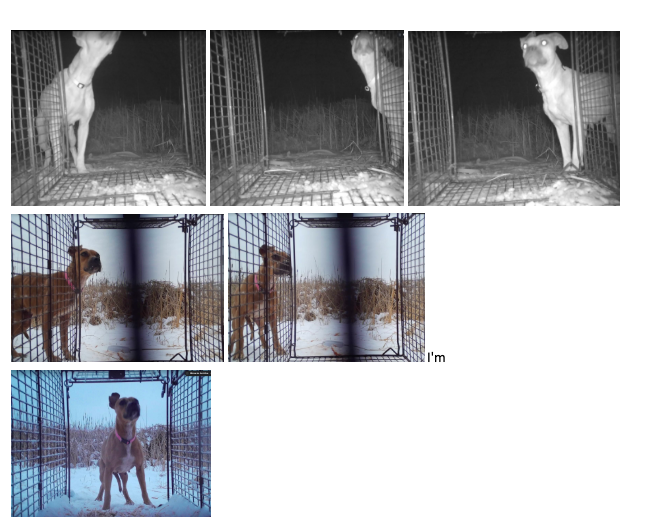
On 3/14/30 Roxy, a Cheweenie mix, went on a car ride with her mom to her work. Unfortunately, she got away from her mom in a busy industrial park area, where there was a main road and a lot of construction going on. She was wearing a collar with tags, sweater and dragging her leash.
Her family put her on Lost Dogs Illinois, printed and distributed flyers and even brought out her favorite cousin dog to see if they could lure her out. They had no luck, no calls.
Fast forward to 4/2/20. A very observant man saw a small dog running along the ramp while he was exiting an expressway. He tried to follow it and saw it go into a gas station parking lot. He went into the gas station and inquired about the dog and they told him they had been seeing the pup for 10 days and feeding it.
Turns out this man had his own experience with a lost pup and knew who to reach out to in order to get this pup safe.
A group text was started in order to get further information on where the dog had been seen, when, and what the feeding routine was.
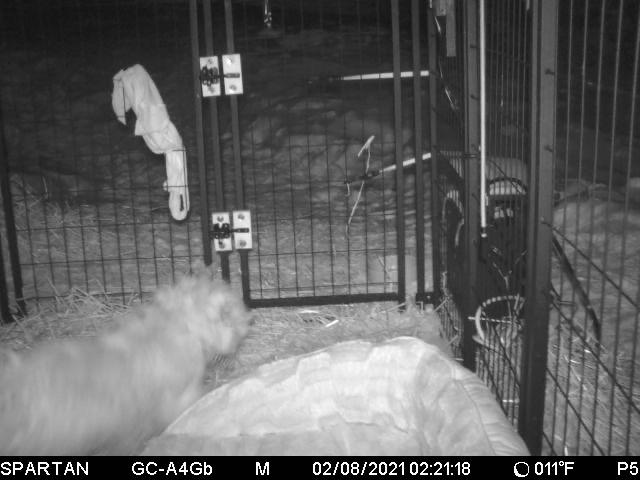
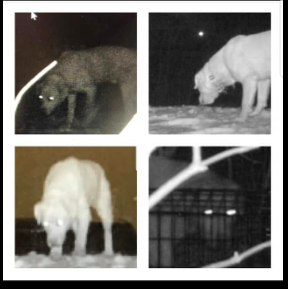
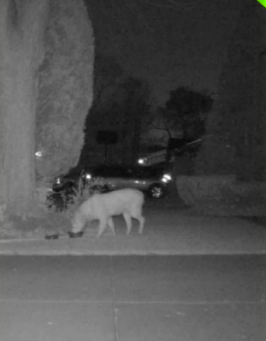
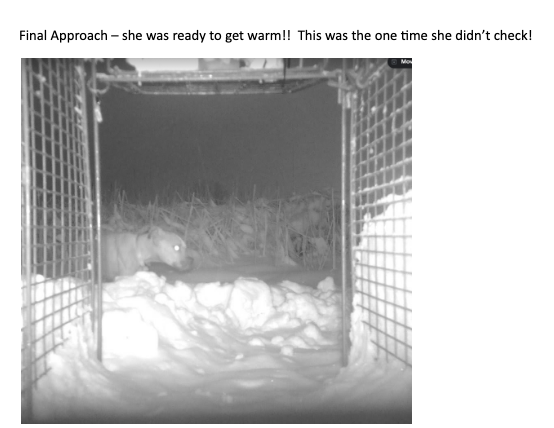
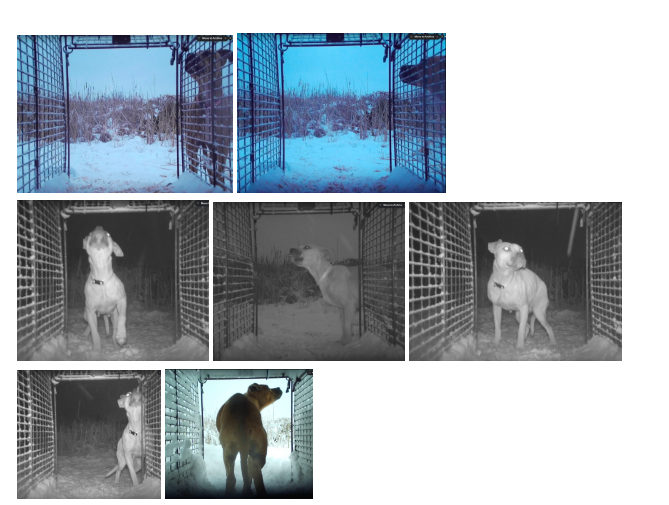
That night a trap and trail camera were set up. The pup seemed to be on a daytime schedule but would start to normally be seen about 3:00 or 4:00 am. Trap was zip tied at 11:00 PM but when leaving I happened to see her near the same ramp she was seen on earlier. I turned around, reset the trap and waited. No show up to 12:00 am so the trap was zip tied open and baited with goodies.
Once home I checked Helping Lost Pets to see what was missing from that area. There she was. Roxy. Missing from about 1/3 mile north of where this pup was being seen. But because it is a busy construction zone while they completely reconstruct a highway interchange, her owners didn’t do too much flyering to the south of that road, just mostly north. Most people would not believe this little pup would be able to make it to the area she ended up at.
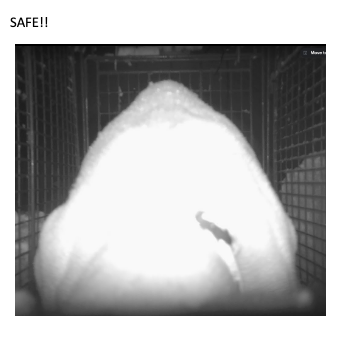
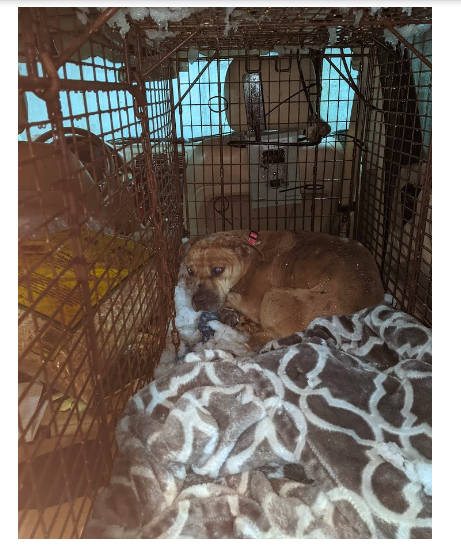
4:27 am she showed up and ate everything in sight. Only problem with that is I was planning on resetting and baiting at 5:15. I did, and she didn’t disappoint. 6:25 she showed up and was in the trap 2 minutes later. As soon as I saw her, I knew it was Roxy. I called her owner, no answer. I text pictures and video, called a second time and then they called back. They could not believe I had her. She had been missing for 20 days!
I offered to drive her to her owners home so that we could let her out of the trap in a closed garage. Roxy was chipped, but I was going to see what her reaction was once I got her home.
There was no doubt she was home.
Roxy’s story came together because of the Village we always mention. From Mike who saw her on the ramp and stopped to inquire about her at Speedway, to Kathy and her crew who were feeding her, and to Mike’s wife Flo, who although they have lost their own dog, Fae, and have not yet found her, continues to reach out to, and has faith in, those of us who have the tools to complete the process.
Never underestimate a dog’s instinct to survive. Roxy lost her sweater, collar and leash at some point in those 20 days. But she kept herself safe and found her resources, ‘til help arrived. Welcome home Roxy!!
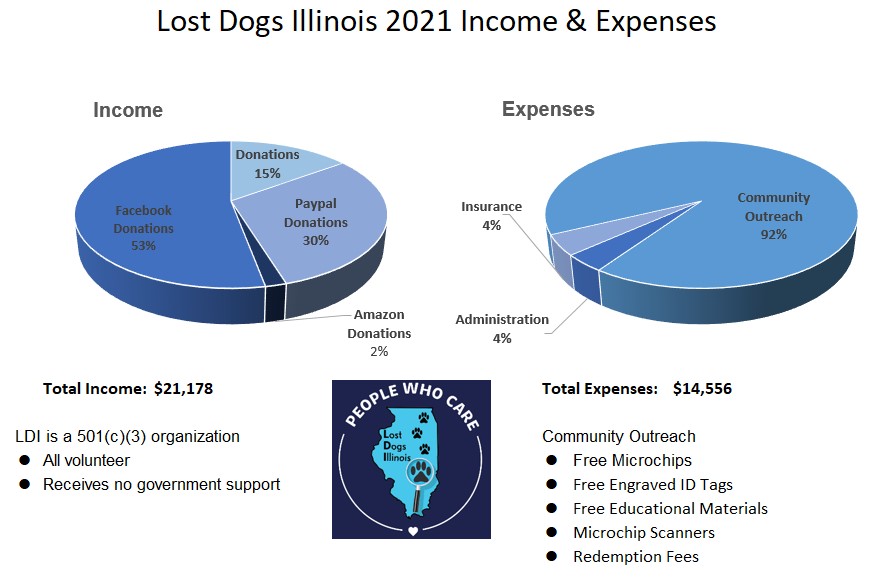
Here is the breakdown of Lost Dogs Illinois’ 2019 Income and Expenses. Our Not-For-Profit group is made up of volunteers spending countless hours on our mission of reuniting lost dogs with their owners. As you can see, not only do we post the dogs on our Facebook page/Twitter feed, but are involved in Community Outreach programs, mostly in under-served areas, in which we provide microchips as well as ID tags, collars/leads, educational material, treats and toys. Lost Dogs Illinois has also used funds to provide microchip scanners to police departments and helped owners with reclaim fees. We want to thank our various supporters including donors, fans, volunteers, vet clinics and animal control facilities for making all of this possible. We could not do what we do without all of you!
Just like a jigsaw puzzle, there are many pieces that need to fall into place when looking for a lost dog. There isn’t a “one size fits all” answer. Not every lost dog will need to be trapped, nor will every lost dog end up in a shelter. Not every microchipped dog will be found and scanned; nor will a tag and collar get every dog home because they can fall off.
From our experience we have seen a lot of lost dogs who may never be found because an owner or a volunteer group who is helping an owner puts “all of their eggs in one basket” and doesn’t consider the other pieces of the puzzle.
Here are a few tips:
1. Enter your dog’s information in a free national lost dog database like Pet FBI, even if you are working with a volunteer group that has their own local database or Facebook group. If your dog is transported or travels a long distance, you need to know that your dog’s information can be searched nationally and for an indefinite period of time. Facebook listings quickly slip down a page and are forgotten.
2. Invest most of your time and energy into hand delivering flyers in an ever-expanding area of where your dog was last seen. Even if your dog was picked up by someone who intends to keep him; somebody, somewhere probably saw something. Make an emotional connection as you hand out flyers. This will help people remember you and your dog if they later recall something or see your dog tomorrow.
3. If your dog is microchipped immediately contact the microchip company to “red flag” them as missing and to make sure everything is up to date. This will prevent a shelter, rescue or finder from trying to re-register the microchip to a new owner without you knowing about it. Remember, this could happen months or even years from when your dog went missing.
4. Consider humane trapping ONLY when you know your dog is hanging out in one area and is reliably eating at a feeding station. Rushing out to set traps before this happens is usually a fruitless endeavor and is a common mistake that can cause an owner to lose hope. Likewise, when an owner sits quietly at the feeding site while the dog is eating and also leaves scent items, a humane trap may not be necessary. The dog may approach on his own. Check for other things that the dog may be able to be trapped in: a shed, house, yard, tennis court, etc. This may work as well as a humane trap.
5. Owners should always have control of the “search”. Volunteer groups who work independently without the owner’s knowledge or approval may undermine efforts of the owner. Also, this additional pressure on the dog may make him leave the flyered area or run into traffic and be hit. If you are an owner and a local volunteer group is not letting you retain control, ask them to remove themselves. If you are still having issues and they are setting traps or changing numbers on your flyers without your permission, call your local police department to ask for assistance. This is YOUR dog. You have the right to make the decisions.
Dogs who go missing from a fire or disaster fit our profile of “Dogs lost from a Stressful Situation” so many of the tips are similar to those in an article on our website. If not chased or pressured out of the area, these dogs will often remain hiding nearby until they feel it is safe to come out. Additionally, these dogs may have been injured in the fire or disaster which may add to their level of stress and fear.
Panicked searchers who are worried about your dog’s survival may make matters worse by scaring your dog out of the area. Unless you are sure that your dog was critically injured, ask people who are wanting to help you to distribute flyers instead of “searching”. This will give your dog an opportunity to come back on his own.
Here are our SIX TOP TIPS if your dog went missing from a fire or disaster.
1. Leave scent items – including smelly food, water, your dog’s bed or blanket and articles of dirty clothing or even the pillowcase of the person most bonded with the dog. Many of these dogs have fled in terror and are hiding nearby. They may creep back when all is quiet.
2. Ask everyone who is helping to not call or chase your dog. Your dog is already scared. Additional pressure from people “searching” may cause the dog to travel further away. If they are injured, they should be allowed to hunker down and rest. Dogs are incredibly resilient and you see many stories in the media of dogs who survive natural disasters such as earthquakes, tornadoes and hurricanes and who eventually come back on their own.
3. Enter your dog’s information into a national free database Helping Lost Pets or Pet FBI. This will ensure their information is searchable if they are found far away or are lost for a long time.
4. Quickly hand distribute flyers in the immediate area where your dog went missing. Expand this area as time goes on and remember to ask everyone to not call or chase your dog. If you have been injured in the fire or disaster, enlist trusted people to help you who understand how important it is to remain calm and organized.
5. Notify all local authorities including police departments, animal shelters and vets clinics. Take two copies of your flyer to each – one for the back staff and one for the front desk and the public bulletin board. If your dog is injured, a Good Samaritan may pick him up and take him to a vet or shelter for medical care. Likewise, someone visiting the clinic may see your flyer and recognize your dog.
6. If your dog is microchipped immediately contact the microchip company to “red flag” your dog as missing and to make sure your contact information is up to date. The microchip company needs to know that they should not transfer ownership to a new person without contacting you first. This can happen if your dog ends up in a shelter and completes the stray hold (which may be as short as 24 hours) without being able to reach you.
398 dead-end microchip cases/rabies tags were submitted! We contacted 223 owners, about their dogs or cats, and personally helped to reunite 141 dogs and cats in 2019!